Two Nations Under One Health Service: How Labour's NHS Is Quietly Pricing Out the Middle Class from Decent Care
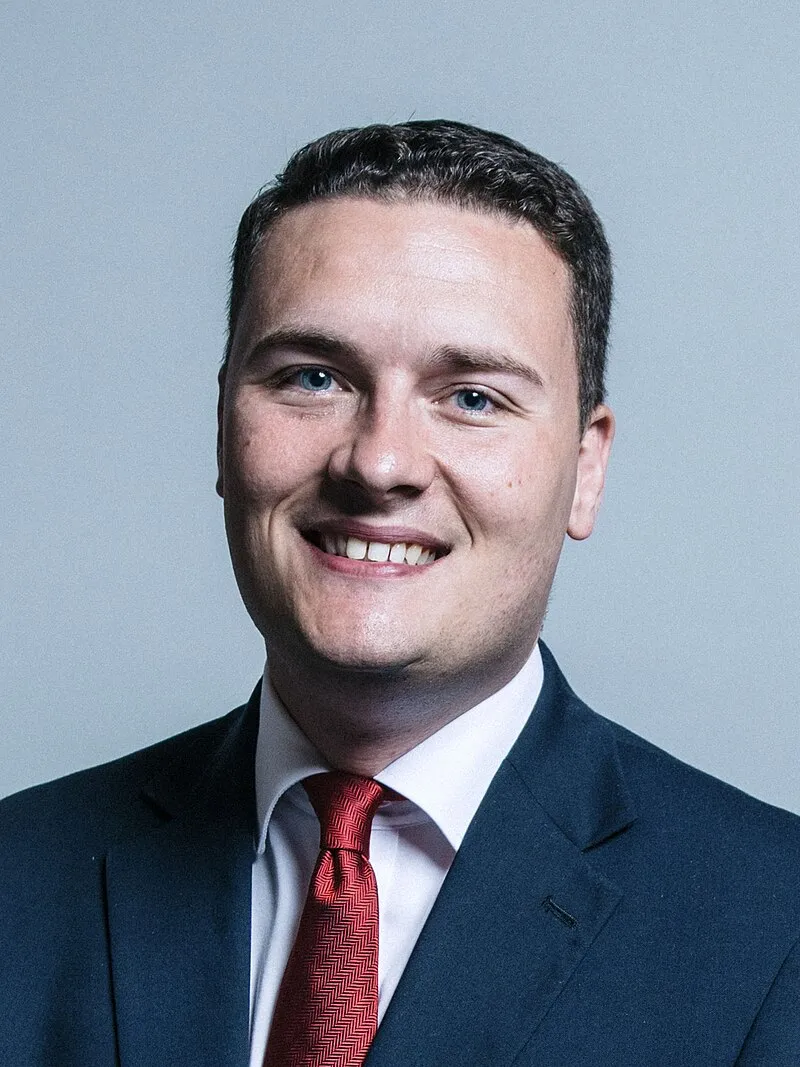
Photo of Wes Streeting, via Wikimedia Commons
The Queue Is the Policy
In February 2025, NHS England recorded approximately 7.4 million people on its elective waiting list — a figure that, despite modest seasonal fluctuations, has remained stubbornly near record territory since the pandemic. The average wait for consultant-led treatment now stretches beyond 14 weeks, and for certain specialisms — orthopaedics, ophthalmology, audiology — patients in some regions are waiting the better part of two years. These are not statistics. They are lives on hold.
Labour came to power promising to "fix" the NHS. Wes Streeting, the Health Secretary, was at least candid enough during the election campaign to admit the service was "broken." Twelve months on, the prescription has amounted to a pay settlement for junior doctors that cost the Treasury an estimated £2.4 billion, a reorganisation of NHS England's central bureaucracy, and a great deal of ministerial language about "reform" that has yet to translate into measurable improvement for the patient waiting in pain in Wolverhampton or Wakefield.
What is actually happening — quietly, without fanfare, and with no small amount of political embarrassment — is the consolidation of a two-tier system.
The Private Escape Valve
Private healthcare providers reported record revenues in 2024. Nuffield Health, Spire Healthcare, and BMI Healthcare have all expanded capacity in recent years, and the Association of British Insurers confirmed that demand for private medical insurance grew significantly as NHS delays lengthened. According to LaingBuisson data cited by the Financial Times, an estimated 2.8 million people in the UK now hold some form of private health cover outside of employer schemes — a figure that has risen sharply since 2021.
The people buying that cover are not, in the main, the wealthy. They are middle-income earners — teachers, tradespeople, mid-level managers — who have already paid their National Insurance contributions in full, who are entitled to NHS treatment, and who are now paying again simply to receive timely care. They are not jumping the queue out of privilege. They are escaping a system that has ceased to function for them.
This is the dirty secret Labour dare not speak aloud: the NHS, as currently constituted, is redistributing healthcare access away from those who cannot afford to exit it. The poorest patients — those with no private option — are left to wait longest. The equity argument, so beloved of the left, runs directly against the outcomes the current system produces.
Ideological Paralysis in Place of Reform
The intellectual blockage is not financial, at least not entirely. It is ideological. The Labour Party's relationship with the NHS is quasi-theological. The health service is treated not as a public institution to be scrutinised and improved, but as a sacred covenant — any questioning of its structure interpreted as an attack on its founding principles.
This has produced a peculiar inversion: a left-wing government defending a monopoly provider against competitive pressure, while proclaiming itself the champion of working people. The internal market reforms introduced under the Conservatives — particularly the NHS reforms of 2012 and the subsequent expansion of independent sector treatment centres — were imperfect, contested, and often poorly implemented. But the underlying logic was sound: that patient choice and provider competition improve outcomes and reduce waiting times. The evidence from comparable healthcare systems in Scandinavia and the Netherlands, where regulated competition sits alongside universal access, supports this conclusion.
Streeting has occasionally flirted with this orthodoxy, suggesting that patients should be able to choose their provider and that independent sector capacity should be used more aggressively. Each time he has done so, the left of his party has reacted with fury. The result is policy paralysis dressed up as prudence.
The Conservative Alternative
The critics of market-based reform make a legitimate point: that poorly designed competition can fragment care, incentivise cherry-picking of profitable cases, and disadvantage the most complex patients. This is a real risk, and any honest conservative must acknowledge it. The NHS's integrated structure does confer genuine advantages in managing chronic conditions and coordinating complex pathways.
But the strongest version of the reform argument is not privatisation — it is diversification. Expand the number of providers eligible for NHS contracts. Allow patients to use NHS funding at regulated independent providers when their local trust cannot offer treatment within a defined timeframe. Introduce genuine transparency about waiting times by hospital and by consultant. Restore the patient passport concept, allowing those who opt for private treatment to receive a contribution from the public purse toward their care, reducing both the queue and the cost burden on the individual.
None of this dismantles universal access. All of it makes the system more responsive, more accountable, and more humane.
What This Signals for the Political Landscape
The NHS will be a defining battleground at the next general election. Labour's vulnerability is not that it has underfunded the service — it has poured money into it, as governments of both colours have done for two decades — but that it has confused spending with reform. The public, polling consistently shows, cares less about the ideological purity of who delivers care than about whether they can actually receive it when they need it.
Conservatives who wish to recapture the political centre ground on health must resist two temptations: the urge to match Labour's spending pledges pound for pound, and the urge to say nothing at all for fear of the inevitable "privatisation" smear. The honest, persuasive case is this — the current settlement is failing patients, it is creating a two-tier system by default rather than by design, and a government serious about equality of access would be expanding choice rather than defending a broken monopoly.
A health service that forces its citizens to pay twice is not a safety net. It is a trap — and the people it traps hardest are precisely those it was built to protect.