The Police and Crime Commissioner Racket: Why Britain Is Paying Millions for a Political Vanity Project That Makes Nobody Safer

A Democratic Experiment That Has Quietly Failed
When the Coalition Government introduced Police and Crime Commissioners in November 2012, the pitch was straightforward and, on its face, compelling: replace the opaque, unaccountable police authorities with a single elected figure who would answer directly to local voters. The public would finally have a named individual to hold responsible for policing in their area. It sounded like a conservative idea — democratic, direct, and lean.
More than a decade on, the evidence suggests we have created something rather different: a new tier of well-remunerated political operatives, supported by expanding offices, staffed by political appointees, and increasingly focused on press releases, public consultations, and culture-war positioning rather than the unglamorous business of keeping communities safe.
The question conservatives ought to be asking is not whether PCCs were a good idea in principle — they were — but whether the institution as it has evolved in practice represents value for money, or whether it has become precisely the kind of bureaucratic self-perpetuation that the Right exists to dismantle.
The Cost of Accountability
PCC salaries are set by an independent panel and currently range from approximately £70,000 to over £100,000 per annum depending on the force area, with London's Mayor acting in the equivalent role. That figure alone is not scandalous. The problem is what surrounds it.
Each PCC maintains an office — formally known as the Office of the Police and Crime Commissioner (OPCC) — staffed by a chief executive, a deputy PCC (in many cases), communications officers, policy advisers, data analysts, and assorted support staff. According to data published by individual OPCCs and collated by researchers including those at the Policy Exchange think tank, total annual running costs across England and Wales for these offices run into the tens of millions of pounds. Some OPCCs employ upwards of thirty full-time staff. The West Midlands OPCC, for instance, has in recent years maintained a headcount rivalling that of a small local authority department.
 Photo: Policy Exchange, via images.prismic.io
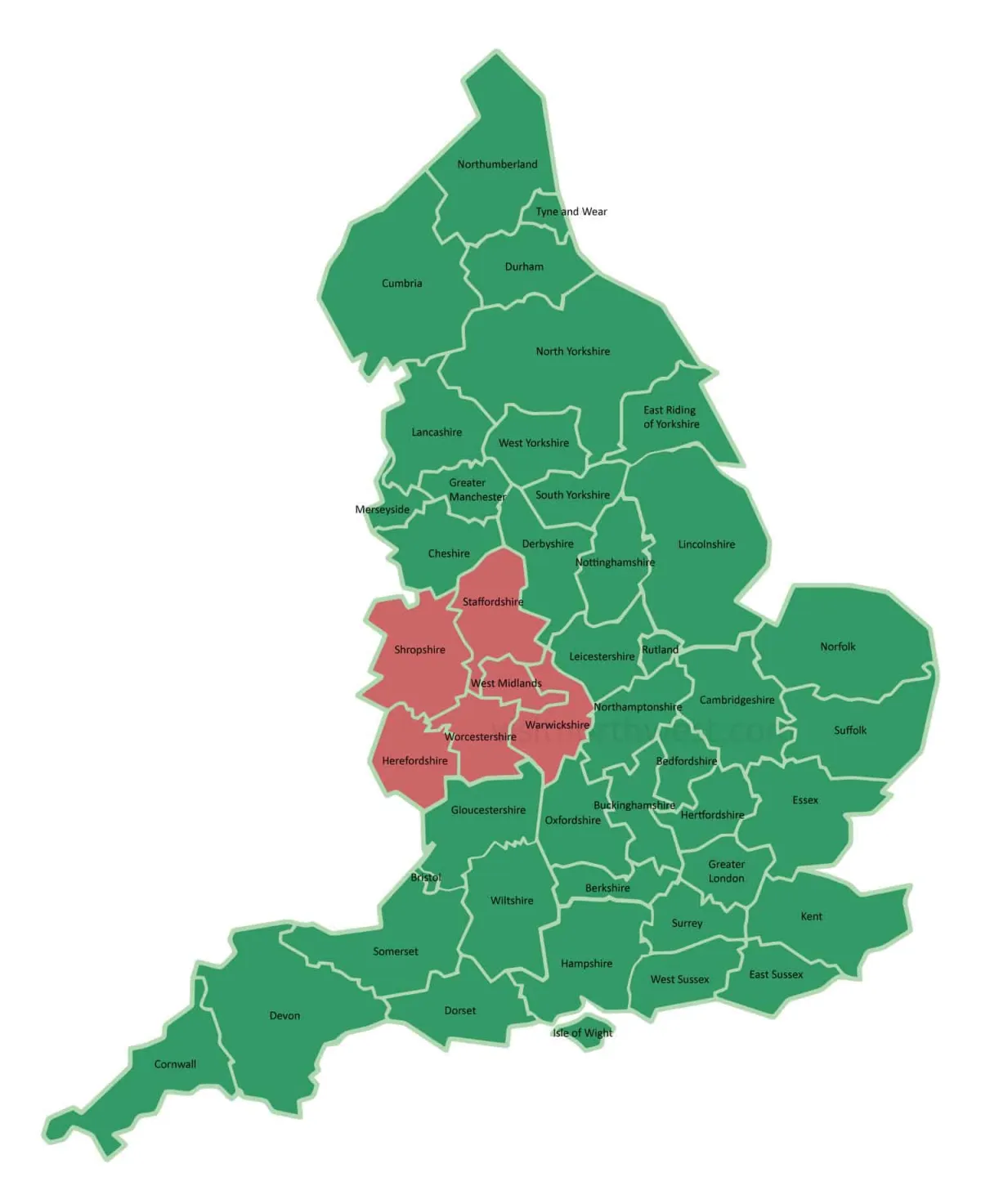 Photo: West Midlands, via www.visitnorthwest.com
This is not accountability. This is bureaucracy wearing accountability's clothing.
Operational Policing vs. Political Theatre
The structural problem is one of incentives. PCCs are elected politicians. Their career advancement depends on visibility, on narrative, on being seen to Do Something. This creates a systematic pressure to prioritise the press-friendly over the operational.
The result is a genre of PCC output that will be familiar to anyone who has observed the institution closely: glossy strategies on county lines, consultation documents on violence against women and girls, social media campaigns on hate crime reporting, and — in several egregious cases — forays into explicitly ideological territory that have nothing whatsoever to do with policing outcomes.
Meanwhile, the metrics that actually matter — detection rates, response times, neighbourhood officer visibility — have in many areas continued their long decline. According to Home Office statistics, the proportion of crimes resulting in a charge or summons fell from around 15 per cent in 2015 to just 5.6 per cent in the year to March 2023. PCCs have been in post throughout this entire period of deterioration. They have not reversed it.
To be fair to the strongest version of the pro-PCC argument: some commissioners have been genuinely effective. Vera Baird in Northumbria and Damian Iszatt in various capacities have been cited as examples of PCCs who drove meaningful change. And there is a legitimate case that before PCCs, police authorities were even less accountable — invisible committees of councillors who attracted zero public attention and faced zero democratic consequences for poor performance.
 Photo: Vera Baird, via ukcp.uk
That argument has some force. But it proves too little. The relevant question is not whether PCCs are better than police authorities were. It is whether this particular model — at this particular cost, with these particular incentive structures — is the best available mechanism for democratic oversight of policing. And the answer, after twelve years of evidence, is almost certainly no.
What Reform Should Look Like
The conservative case here is not for abolition for its own sake. It is for reform grounded in the principles that justified the original policy: accountability, efficiency, and democratic legitimacy.
There are at least two serious options worth examining. The first is radical slimming of the OPCC model — capping office budgets, abolishing deputy PCC roles (which in many cases exist purely to reward political allies), and requiring OPCCs to publish granular performance data against which the electorate can actually judge their commissioner's record.
The second, more radical option is to transfer the PCC function to directly elected mayors in combined authority areas — where they exist — and to revert to reformed, more transparent police committees elsewhere. This would consolidate accountability without multiplying it, and would remove the perverse incentive structure that turns PCCs into media personalities rather than operational overseers.
A Warning for the Right
There is a broader lesson here that conservatives would do well to absorb. The PCC experiment demonstrates that even well-intentioned structural reforms can be captured by the political class and converted into vehicles for self-advancement. The answer is not to abandon the goal of democratic accountability — that goal remains right — but to design institutions that are structurally resistant to the empire-building instinct that afflicts all public bodies given half a chance.
The public did not vote for PCCs to have communications teams and consultation strategies. They voted for someone who would make their streets safer. Twelve years on, that someone has in too many cases become someone else entirely.
The Police and Crime Commissioner was conceived as a check on bureaucracy — it has become one.