Supervised in Name Only: How the Probation Service Became Britain's Most Dangerous Fiction

Photo of Shabana Mahmood, via Wikimedia Commons
A System That Exists on Paper
The National Probation Service exists, in theory, to stand between convicted criminals and further harm to the public. It supervises offenders released early from prison, monitors those serving community sentences, and is supposed to intervene when individuals begin showing signs of reoffending. In practice, a growing body of evidence suggests that for a significant proportion of those under its watch, supervision is little more than a periodic phone call, an unanswered letter, or a missed appointment that generates paperwork rather than action.
Her Majesty's Inspectorate of Probation has issued a succession of damning reports over recent years, documenting caseloads that routinely exceed safe limits, staff retention rates in freefall, and risk assessments so perfunctory as to be functionally meaningless. The most recent inspections have found that in some regions, individual probation officers are managing upwards of 60 to 70 cases — against a recommended maximum that most professional bodies regard as being considerably lower. When a single officer is responsible for monitoring that many individuals, many of whom have histories of violence, sexual offending, or persistent acquisitive crime, the word 'supervision' loses any operational meaning.
The Grayling Legacy and the Rehabilitation Revolution That Wasn't
It would be dishonest to pretend that the origins of this crisis are entirely Labour's doing. The catastrophic part-privatisation of probation services under Chris Grayling — the so-called Transforming Rehabilitation programme introduced in 2014 — fractured a functioning, if imperfect, system into a patchwork of Community Rehabilitation Companies that proved commercially unviable, operationally chaotic, and ultimately dangerous. The subsequent renationalisation under the Conservative government in 2021 reunified the service, but it inherited a workforce that had been demoralised, depleted, and stripped of institutional knowledge.
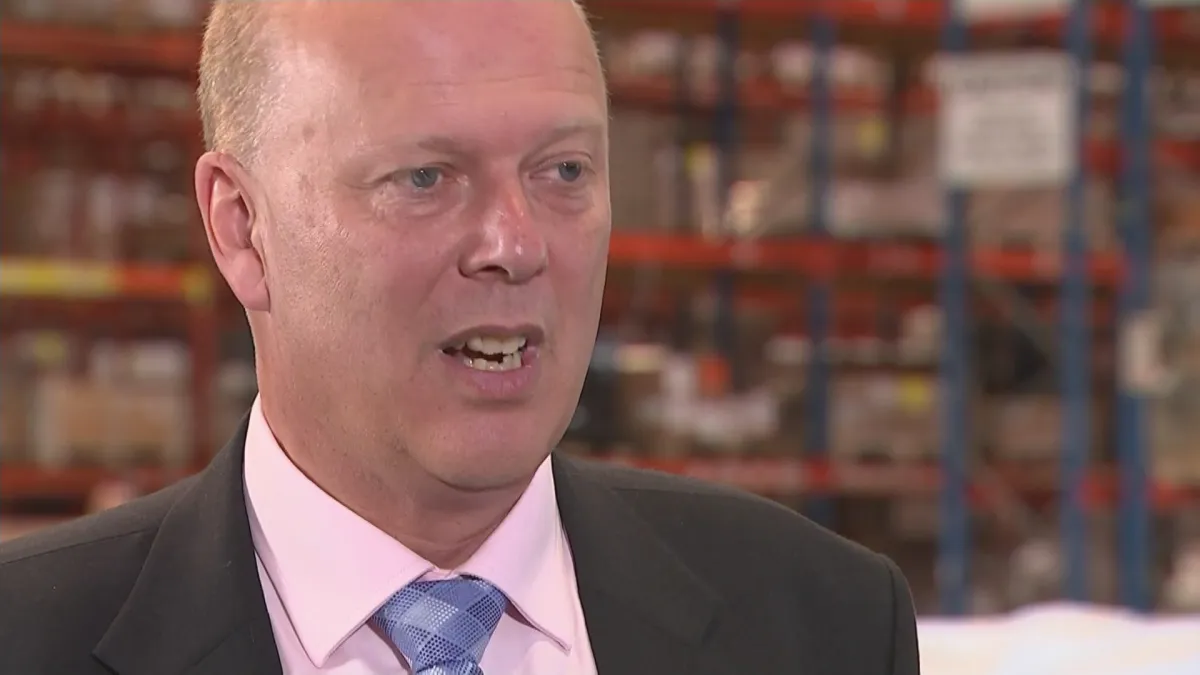 Photo: Chris Grayling, via fournews-assets-prod-s3-ew1-nmprod.s3.amazonaws.com
That context matters. But context is not absolution, particularly for a Labour government that arrived in office promising to repair public services and restore basic competence to the machinery of the state. What has followed has been, at best, a continuation of managed decline and, at worst, an active indifference to the consequences.
The Numbers Behind the Negligence
The Probation Institute and successive inspectorate reports have painted a consistent picture. Vacancy rates within the National Probation Service have remained stubbornly high. Newly qualified officers — who are in any case in short supply — are being assigned complex, high-risk cases before they have the experience to manage them safely. The average time to complete a qualification and reach full professional competence has meant that the pipeline of new staff cannot keep pace with attrition.
 Photo: The Probation Institute, via images.squarespace-cdn.com
Serious Further Offence reviews — the internal inquiries triggered when someone under probation supervision commits a grave crime — have become a grim routine. Each review generates recommendations. Many of those recommendations are repeated from previous reviews. The cycle continues. The victims are real. The accountability is theoretical.
The early release scheme introduced by the current government in 2024, which saw thousands of prisoners freed having served a smaller proportion of their sentences, compounded the problem directly. More individuals in the community, supervised by a service that was already at breaking point, meant that effective oversight became still more diluted. Ministers insisted that risk assessments were conducted before each release. Inspectors found that the quality of those assessments was, in many cases, inadequate.
The Rehabilitation Rhetoric Trap
The progressive response to criticism of the probation service almost always defaults to the same position: that the answer is more investment in rehabilitation, more therapeutic programmes, more holistic support for offenders. There is nothing inherently wrong with rehabilitation as an objective. A conservative case for it can be made on purely practical grounds — a successfully rehabilitated offender does not reoffend, and that is good for everyone, including taxpayers who would otherwise fund a return to custody.
But rehabilitation rhetoric becomes dangerous when it displaces, rather than supplements, the primary function of the probation service: public protection. The two are not in conflict, but the institutional culture of the service — shaped by decades of academic criminology, progressive managerialism, and a political reluctance to talk plainly about risk — has allowed rehabilitation aspiration to crowd out enforcement reality. Officers who raise concerns about dangerous individuals are too often navigating a system that treats escalation as a failure of compassion rather than a discharge of professional duty.
The strongest version of the opposing argument is that the service is simply underfunded and that criticism of its culture is a distraction from the resource question. That argument deserves a direct answer. Funding matters. But the inspectorate's findings are not primarily about money — they are about prioritisation, culture, and accountability. Services that have received additional resource have not always shown commensurate improvement in outcomes. This is a structural problem as much as a financial one.
What a Conservative Public Protection Agenda Looks Like
The conservative case here is neither complicated nor unkind. The state's first duty — before redistribution, before net zero targets, before any of the progressive policy agenda — is the physical safety of its citizens. A convicted violent offender who is nominally supervised but effectively unwatched is not a rehabilitation success story in progress. He is a risk that the state has chosen, through negligence or ideology, to transfer from the prison estate to the public street.
Restoring the probation service to functional competence requires honest caseload limits enforced in statute, a recruitment and retention strategy that makes the profession genuinely competitive with comparable graduate careers, and an inspection regime with real teeth — one that can impose consequences on failing regions rather than simply publishing reports that gather dust in ministerial inboxes.
It also requires political honesty. Ministers must stop measuring probation success by reoffending statistics alone and start measuring it by the quality of supervision delivered to each individual under the service's watch. Process matters. Rigour matters. And when it fails, accountability must follow.
A Verdict the Public Deserves to Hear
Britain's probation service is not a broken system waiting to be fixed — it is a broken system actively in use, managing some of the most dangerous individuals in the country, on behalf of a public that has no idea how thin the margin of safety actually is.
The state that cannot protect its own citizens from those it has already convicted has forfeited its claim to competence on everything else.