Renting Back Our Own Island: The Chagos Deal and the Quiet Erosion of British Sovereignty
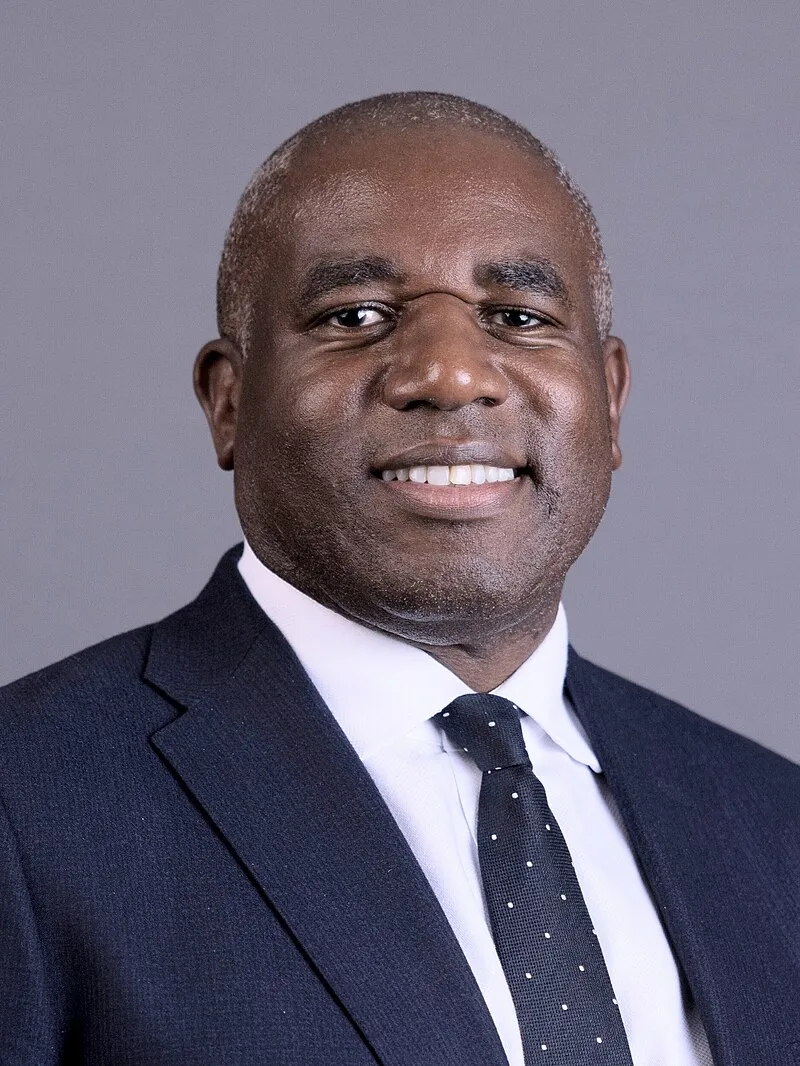
Photo of David Lammy, via Wikimedia Commons
There are few clearer measures of a nation's self-confidence than the territories it chooses to keep. Under the terms of the agreement struck between the United Kingdom and Mauritius — finalised in 2025 after years of negotiation — Britain will transfer sovereignty over the Chagos Archipelago while leasing back the strategically vital base at Diego Garcia for an annual fee reported to run into the hundreds of millions of pounds. The United States, which operates its most important Indian Ocean facility from the island, pressed hard for certainty over the base's future. What it did not need was for its closest ally to become a tenant on its own former soil.
A Surrender Dressed as Diplomacy
The government's case rests on a 2019 advisory opinion of the International Court of Justice, which found — by a majority, and on an advisory rather than binding basis — that the decolonisation of Mauritius in 1968 was not lawfully completed. The UN General Assembly endorsed that opinion. Ministers have argued that continued occupation of the islands would leave Britain in open defiance of international law and isolate us diplomatically.
It is worth stating plainly what that argument concedes. An advisory opinion is not a judgment. No court compelled Britain to act. The General Assembly, a body in which the United Kingdom holds one vote among 193 and where resolutions carry no binding force, expressed a view — and the Foreign Office treated it as a command. For a country that spent decades insisting that its overseas territories remain British for as long as their inhabitants wish, the precedent is corrosive.
The Precedent Problem
The obvious question is why this logic stops at the Chagos Islands. Argentina's claim to the Falkland Islands rests on nothing sturdier than Mauritius's claim to the Chagos Archipelago: geography, history read selectively, and the decolonisation committee at the United Nations. Spain's position on Gibraltar is of the same character. In each case, the inhabitants — the people whose wishes were supposed to matter — have made their position unambiguous. The Falkland Islanders voted to remain British by 151 votes to 3 in a 2013 referendum. The Gibraltarians did the same in 2002, rejecting joint sovereignty by nearly 99 per cent.
The government will say the Chagos case is distinguishable because the islanders were removed, and there is genuine historical shame in the eviction of the Chagossians in the late 1960s and early 1970s. But the deal does not restore the Chagossians to Diego Garcia; a resettlement programme covers outlying islands, and its scale and feasibility remain uncertain. The primary beneficiary of sovereignty transfer is the Mauritian state — a state that ceded the islands' value to Britain in 1965 in a lawful transaction at the time, and which now collects a rent stream from the proceeds.
Who Benefits, and Who Pays
The strategic arithmetic is where the deal becomes hardest to defend. Diego Garcia anchors American and British power projection across the Indian Ocean, a region through which a large share of global trade and energy flows and where Chinese naval ambitions are growing by the year. Sovereignty over the surrounding waters will now rest with Mauritius, a state with growing economic ties to Beijing and no naval capacity to police the zone. The treaty does contain provisions intended to keep the base secure, and American officials have expressed satisfaction with the operational guarantees. But guarantees depend on the good faith of the sovereign — and sovereignty, once surrendered, is not returned.
The fiscal dimension is, if anything, more galling. Britain will pay Mauritius an annual sum — reported at around £100 million or more per year, indexed over decades — for the right to operate a facility on territory we owned. In an age when the Ministry of Defence is pleading poverty over munitions stockpiles and recruitment shortfalls, this is a recurring liability entered into voluntarily.
The Counter-Argument, Taken Seriously
The strongest case for the deal is not sentiment but stability. Had Britain refused, the argument runs, litigation and General Assembly pressure would have continued indefinitely, the base's legal position would have clouded, and the Americans — who want the matter settled — might have concluded that an unreliable ally is worse than a diminished one. Settling removes a running sore.
This is not a foolish argument, but it proves too much. By that logic, any territory contested by a well-organised diplomatic campaign should be conceded, because the contest itself is costly. Sovereignty is precisely the thing that must be defended against the accumulation of such campaigns. A nation that settles every claim to avoid friction will eventually find it has no territory left worth defending.
The Wider Signal
The Chagos deal will be read carefully in Buenos Aires, Madrid, Beijing and every other capital with a grievance against a British map. It teaches that persistence at international forums pays, that British resolve is negotiable, and that the Foreign Office instinct — conciliate first, apologise second — governs. For a government that came to office promising to restore Britain's standing abroad, the first big demonstration of that standing was to shrink the map.
The verdict is difficult to escape: when a country pays rent to occupy what it once owned, it has not concluded a treaty — it has acknowledged defeat.