Five Ways the Equality Act Stopped Meaning What Parliament Wrote
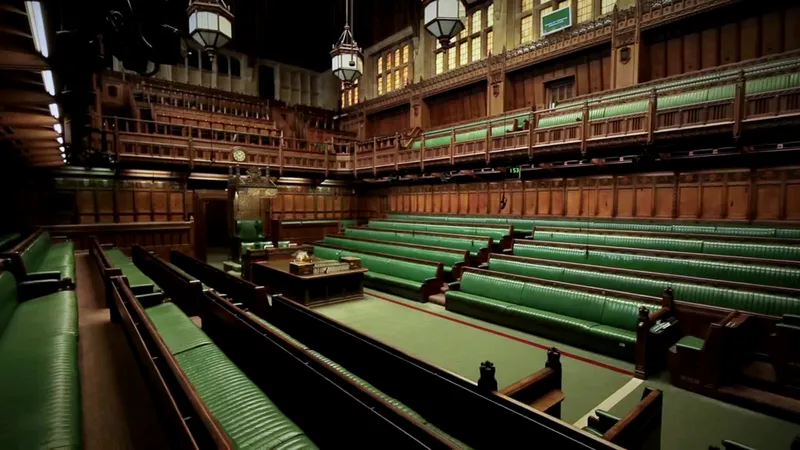
Photo of House of Commons, via Wikimedia Commons
Statutes are passed by Parliament; they are lived in by regulators, HR departments and public bodies. Somewhere between the two, the Equality Act 2010 has undergone a quiet transformation. The text remains on the statute book, but its meaning in practice has been reshaped by guidance documents, institutional risk-aversion and campaign-group pressure — until a law designed to protect everyone from discrimination is routinely deployed to override the very provisions Parliament wrote for women, for belief and for common sense.
Below are five patterns, drawn from well-documented cases and official guidance, in which the Act has been stretched beyond its intended meaning — and what Parliament should do about it.
One: Single-Sex Spaces Treated as an Exception, Not a Right
Sections 27 and 28 of the Act permit the provision of single-sex services — refuges, hospital wards, changing rooms — where that is a proportionate means of achieving a legitimate aim. In principle, women's refuges and wards are entitled to be single-sex. In practice, many providers have operated as though excluding biological males requires justification, while including them requires none. Guidance from public bodies has often inverted the statutory default, treating single-sex provision as a legal minefield rather than an ordinary entitlement. The remedy is straightforward: statutory guidance confirming that the protected characteristic of sex refers to biological sex for the purposes of single-sex services, so that providers can exercise the exemption without fear.
Two: 'Gender Reassignment' Stretched Into 'Self-Identified Gender'
The Act protects people with the protected characteristic of gender reassignment — a defined, medical concept. Over the years, numerous institutional policies have treated anyone who declares a gender identity as falling within that characteristic, and sometimes as entitled to access opposite-sex facilities. Whatever one's view of self-identification as a social matter, it is not what the 2010 statute says. The Supreme Court's judgment in the For Women Scotland litigation in 2025 confirmed that 'sex' in the Act means biological sex — a welcome correction, but one that required years of litigation that Parliament could have prevented with clear drafting.
Three: Belief Discrimination Weaponised in Both Directions
The Act protects religion or belief. Yet employees with gender-critical views — most famously Maya Forstater, who won her case at the Employment Appeal Tribunal in 2021 — found themselves unemployable for holding beliefs that a court ruled were protected. The pattern repeated in medicine, academia and the civil service: a statutory protection existed on paper, but employers behaved as though the only impermissible belief was the one held by the employee. Parliament should strengthen the belief provisions with explicit protection for lawful opinion in the workplace.
Four: Equality Impact Assessments as a Veto on Common Sense
Originally a tool for anticipating discriminatory effects, equality impact assessment has metastasised into a bureaucratic ritual that delays decisions, inflates costs and is routinely cited to justify outcomes no legislator contemplated — from changes to provision for women in sport to the rewriting of workplace policies. The assessment was meant to serve the Act; in too many institutions the Act now serves the assessment.
Five: The Chilling of Ordinary Speech
Perhaps the most corrosive effect is cultural rather than legal. Public employees report avoiding plain English about sex — using 'bodies', 'menstruators', 'people who give birth' — not because any statute demands it, but because institutional interpretation of the Act, and the HR industry built around it, has made honesty feel hazardous. A law against discrimination has become, in practice, a grammar of euphemism enforced by fear of tribunal.
The Strongest Counter-Argument
Defenders of the status quo argue that trans people are vulnerable and need protection, and that guidance exists to help confused providers navigate a sensitive area. Both points deserve respect: gender dysphoria is a real and often distressing condition, and trans people are entitled to dignity and to protection from discrimination — the Act gives them that, under gender reassignment. But the argument proves too much. Protecting a minority from discrimination does not require redefining sex, dissolving single-sex spaces or chilling speech. The two sets of protections can coexist; the statute was written so that they would.
Taking the Statute Back
The fixes are neither draconian nor complicated: statutory guidance defining 'sex' as biological sex for single-sex purposes; confirmation that gender reassignment means what it says; explicit workplace protection for lawful belief; and a cull of the guidance industry that has substituted institutional anxiety for statutory text. The Equality Act 2010 was not the problem. What has been done to it is — and only Parliament can undo it.