Green Subsidy, Working-Class Cost: How Britain's Net Zero Agenda Is Transferring Wealth From the Poor to the Planet-Signalling Class
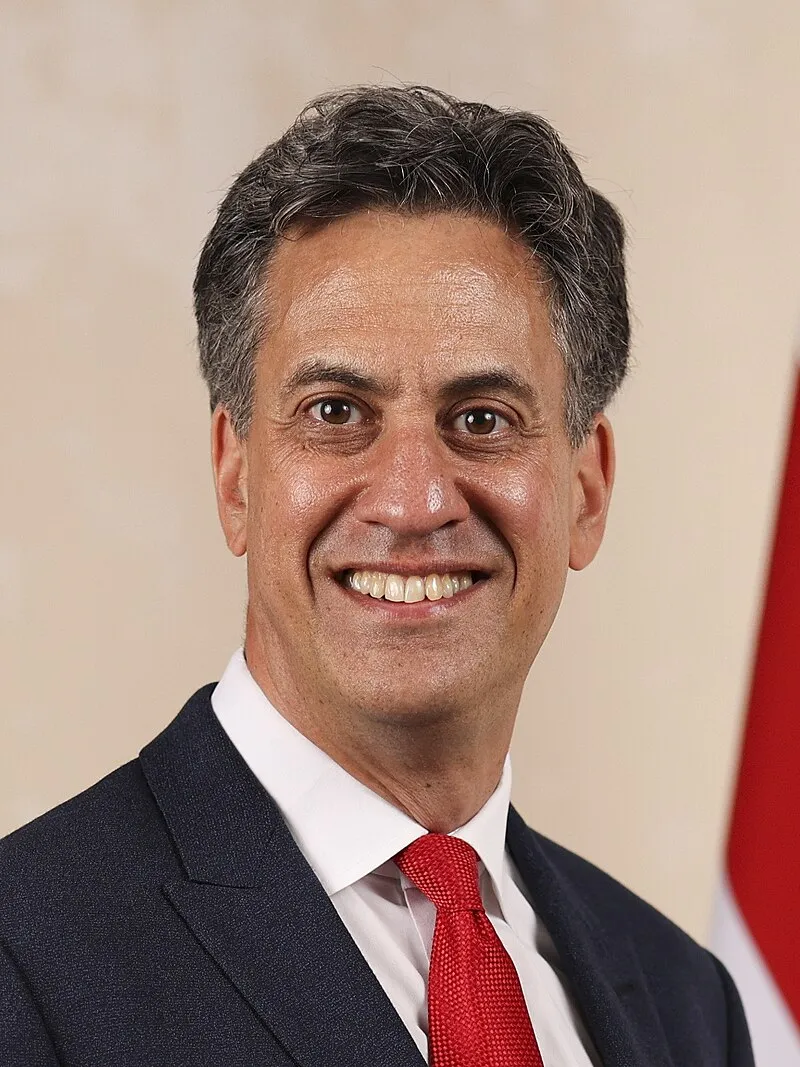
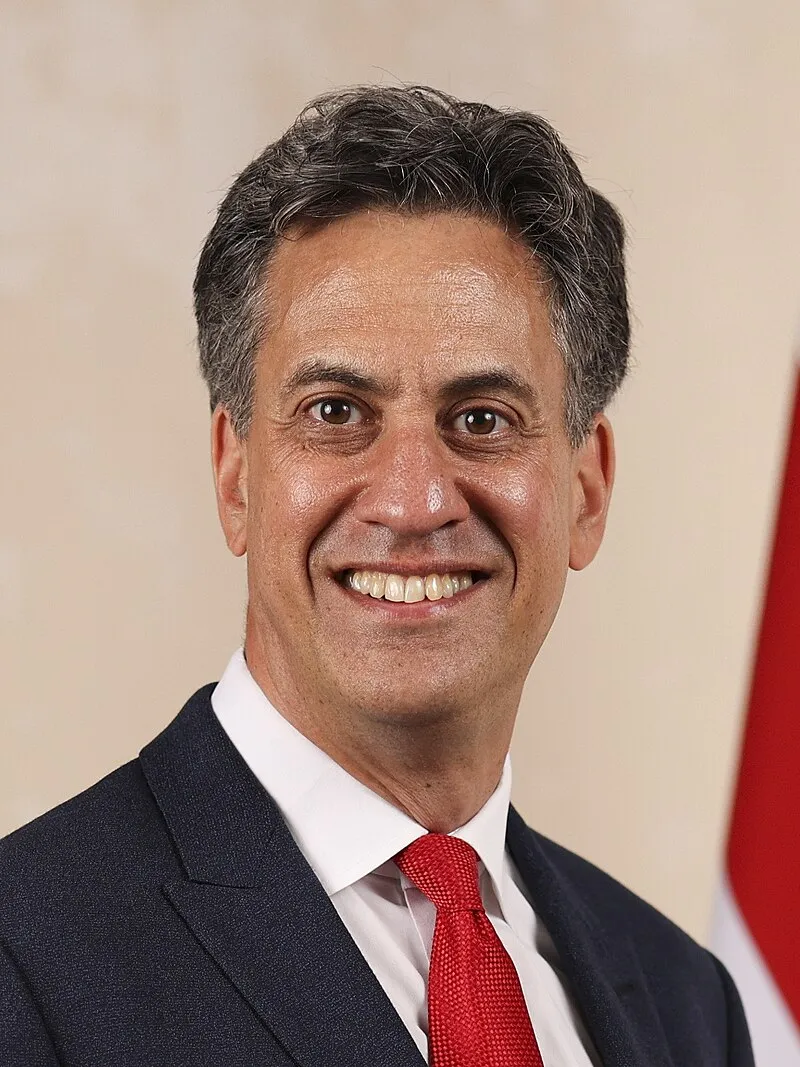
Photo of Ed Miliband, via Wikimedia Commons
The Bill Nobody Voted For
Energy bills in Britain have become, over the course of the past decade, something rather different from what most households understand them to be. They are not simply a charge for the gas and electricity consumed. They are a vehicle for a substantial and growing array of levies, obligations, and subsidy mechanisms that have been layered onto the base cost of energy in pursuit of net zero — and that now represent a significant proportion of every household's annual outgoing.
The Office for Budget Responsibility and the Department for Energy Security and Net Zero have both published analysis confirming that policy costs — the umbrella term for green levies and renewable subsidies embedded in bills — add materially to the cost of household energy. Estimates of the total annual policy cost burden on a typical household have ranged from £150 to over £300 depending on the methodology used and the year of calculation, with the figure having grown consistently as the renewable subsidy base has expanded. For households in the lower income deciles, where energy expenditure as a proportion of total income is highest, the burden is not merely significant — it is, in the bluntest sense, unaffordable.
What the Levies Actually Fund
Understanding why this matters requires understanding what the levies are actually paying for. The Contracts for Difference scheme — the primary mechanism by which the government subsidises renewable energy generation — guarantees offshore wind and solar operators a fixed strike price for the electricity they generate, with the difference between that price and the prevailing market rate funded through a levy on household and business bills. When wholesale prices fall below the strike price, consumers pay the difference. The scheme has successfully incentivised renewable capacity — but at a cost that is distributed regressively across the bill-paying population.
Additional obligations include the Warm Home Discount, the Energy Company Obligation, and various grid infrastructure costs associated with connecting intermittent renewable generation to a national grid that was not designed for it. The grid connection and balancing costs — the expense of managing a system in which wind and solar generate electricity when the wind blows and the sun shines rather than when demand requires it — have grown substantially and are projected to grow further as the renewable share of generation increases.
The cumulative effect is a bill that is structurally higher than the underlying cost of energy production would otherwise require, with the excess funding a policy agenda that commands cross-party consensus in Westminster and near-zero scrutiny in the national media.
The China Problem
The environmental case for these levies rests on the assumption that the transition to renewable energy will reduce global emissions. That assumption deserves considerably more scepticism than it typically receives. The solar panels being installed on British rooftops and in British solar farms are manufactured overwhelmingly in China — a country that accounts for roughly 30 per cent of global CO₂ emissions and that continues to commission new coal-fired power stations at a rate that dwarfs any reduction achievable by British policy.
The same applies to the batteries required for electric vehicles and grid storage, the rare earth materials used in wind turbines, and the semiconductor components of heat pumps. Britain's net zero supply chain is, to a degree that should give any honest policymaker pause, a Chinese supply chain. The industrial benefit of the green transition — the manufacturing jobs, the export revenues, the technological capability — is accruing not to the British Midlands or South Wales but to Xinjiang and Jiangsu.
This is not a peripheral observation. It is the central economic reality of the net zero programme as currently constituted. British households are being asked to pay higher energy bills to fund a transition whose primary industrial beneficiaries are located in a geopolitical rival with a deeply problematic human rights record. The solar panels manufactured in Xinjiang have been credibly linked to forced labour. The British consumer paying a green levy on their electricity bill is, at several removes, subsidising that supply chain.
The Regressive Distribution of Pain
The political economy of net zero is one of the most striking examples of regressive policy design in modern British governance. The costs of the green transition fall disproportionately on those least able to bear them: households in older, poorly insulated properties who cannot afford retrofitting; families who cannot access the subsidies for heat pumps or electric vehicles because they do not own their homes or cannot afford the upfront costs; workers in energy-intensive industries — steel, ceramics, chemicals, glass — whose employers face internationally uncompetitive energy prices and who consequently face redundancy.
The benefits, by contrast, accrue disproportionately to the affluent. The homeowner who installs solar panels and an electric vehicle charger captures the subsidy and reduces their bill. The landlord who retrofits a rental property passes the cost to the tenant but captures the energy performance certificate improvement. The investment fund with exposure to offshore wind collects the Contracts for Difference strike price. The policy is, in its distributional effect, a transfer from the working poor to the asset-owning professional class — dressed up in the language of environmental responsibility.
The Strongest Green Counter-Argument
The most serious defence of the current approach is that the long-run cost of climate inaction exceeds the short-run cost of transition, and that the regressive distributional effects can be addressed through targeted support for lower-income households. This is not a frivolous argument. The economic modelling of climate risk does project very substantial costs from unchecked warming, and instruments such as the Warm Home Discount represent a genuine, if inadequate, attempt to protect vulnerable households.
But the argument has two significant weaknesses. First, the distributional compensations are manifestly insufficient — the Warm Home Discount of £150 does not come close to offsetting the full policy cost burden on a low-income household. Second, and more fundamentally, the argument assumes that British domestic emissions reductions produce commensurate global climate benefits. Given that the UK accounts for approximately one per cent of global emissions, and given that Chinese coal capacity additions dwarf any British reduction, the marginal impact of British net zero policy on global temperature outcomes is, by any honest accounting, negligible. We are paying a very high price for a very small effect.
What a Serious Energy Policy Would Look Like
A conservative energy policy would begin from first principles: security of supply, affordability for households, and competitive costs for industry — with emissions reduction pursued where it can be achieved without sacrificing those primary objectives. That means maintaining a diversified generation mix that includes gas and, critically, nuclear — the only low-carbon technology that is reliable, dispatchable, and capable of providing baseload power at scale. It means reforming the Contracts for Difference scheme to ensure that the subsidy burden is transparent, time-limited, and subject to democratic scrutiny. And it means being honest with the public about what net zero costs, who bears those costs, and what it actually achieves in terms of global emissions.
The current approach asks working families to subsidise a supply chain they did not choose, in a country they have never visited, in pursuit of an emissions target whose global impact is statistically invisible.
When the green agenda asks the poorest households in Britain to fund the industrial ambitions of the Chinese Communist Party, it has ceased to be environmentalism and become something considerably less noble.