Carbon Colonialism at Home: How Net Zero Is Stripping Britain's Industrial Heartlands of Their Livelihoods

Photo of Ed Miliband, via Wikimedia Commons
The Furnaces Are Going Cold
In Stoke-on-Trent, a city whose identity was forged in the heat of the bottle kilns, the ceramics industry is fighting for survival. In Scunthorpe, the future of steelmaking hangs by a thread of government subsidy and political will. In Cheshire, chemical plants that have operated continuously for generations are conducting quiet reviews of their long-term viability. In each case, the executives running these businesses will tell you, in private if not always in public, the same thing: the electricity bill is the problem. Not regulation in the abstract, not planning delays, not workforce availability — the cost of industrial electricity in Britain, relative to what their competitors pay on the continent, in Asia, and in North America, has become existential.
This is the story that the Net Zero debate rarely tells. The public conversation about climate policy is dominated by wind turbines, electric vehicles, heat pumps, and the long-range ambitions of a decarbonised economy. What it does not adequately reckon with is the immediate, concrete, and devastating impact that the transition is having on the industries and communities that cannot simply pivot to a software-based business model.
The Numbers That Ministers Prefer Not to Cite
British industrial electricity prices have been consistently among the highest in the developed world. Data published by the International Energy Agency and analysed by trade bodies including Make UK and the Energy Intensive Users Group has shown that UK industrial electricity costs have run at roughly two to four times the equivalent price in France, Germany (post-crisis adjustment), and the United States, depending on the sector, the time period, and the applicable exemptions.
The drivers are structural. Renewable energy subsidies — levied through mechanisms including the Contracts for Difference regime and the Renewables Obligation — add a significant premium to the unit cost of electricity that falls disproportionately on high-volume industrial consumers. Network charges, which reflect the cost of maintaining and expanding grid infrastructure for the energy transition, add further. The result is that a ceramics kiln in Staffordshire, a glass furnace in Sunderland, or an aluminium smelter in Northumberland is operating at a fundamental cost disadvantage to its nearest competitor abroad — not because of management failure, not because of poor investment decisions, but because of the cumulative weight of government policy.
The Energy Intensive Users Group has estimated that without targeted exemptions, energy costs for the most exposed sectors can represent 30 to 40 per cent of total production costs — a figure that makes international competitiveness effectively impossible.
The Offshoring Illusion
Here is the central moral and intellectual failure of current climate policy, and it deserves to be stated plainly: when a British steel plant closes because it cannot afford to operate under the UK's carbon pricing and energy cost regime, the steel does not cease to be produced. It is produced in Turkey, in India, in China — in countries that operate without a carbon price, without meaningful emissions standards, and with electricity grids still overwhelmingly powered by coal.
The carbon is not saved. It is relocated. Global emissions may actually increase, because the alternative production facilities are less efficient than the British plants they replace. Meanwhile, the jobs, the tax revenues, the community anchors, and the industrial expertise accumulated over generations disappear from British towns that have precious few alternative sources of economic identity.
This phenomenon — known in policy circles as carbon leakage — is not a fringe concern. It is documented, modelled, and acknowledged even within government publications. The Office for Budget Responsibility has noted it as a risk. The Climate Change Committee has addressed it in technical annexes. Ministers have introduced partial mitigations — compensation schemes for energy-intensive industries, exemptions from certain levies — but these have been inconsistently applied, administratively burdensome to access, and insufficient in scale to close the competitive gap.
Britain is, in effect, pursuing a policy that is simultaneously bad for the economy, bad for working-class employment, and bad for the global environment. It is a trifecta of failure dressed in the language of virtue.
The Communities Left Behind
The human geography of this crisis is not evenly distributed. The industries most exposed to high energy costs — ceramics, glass, chemicals, steel, paper, foundries — are concentrated in the Midlands, the North of England, South Wales, and parts of Scotland. These are not abstract economic statistics. They are Stoke, Rotherham, Teesside, Port Talbot, Grangemouth.
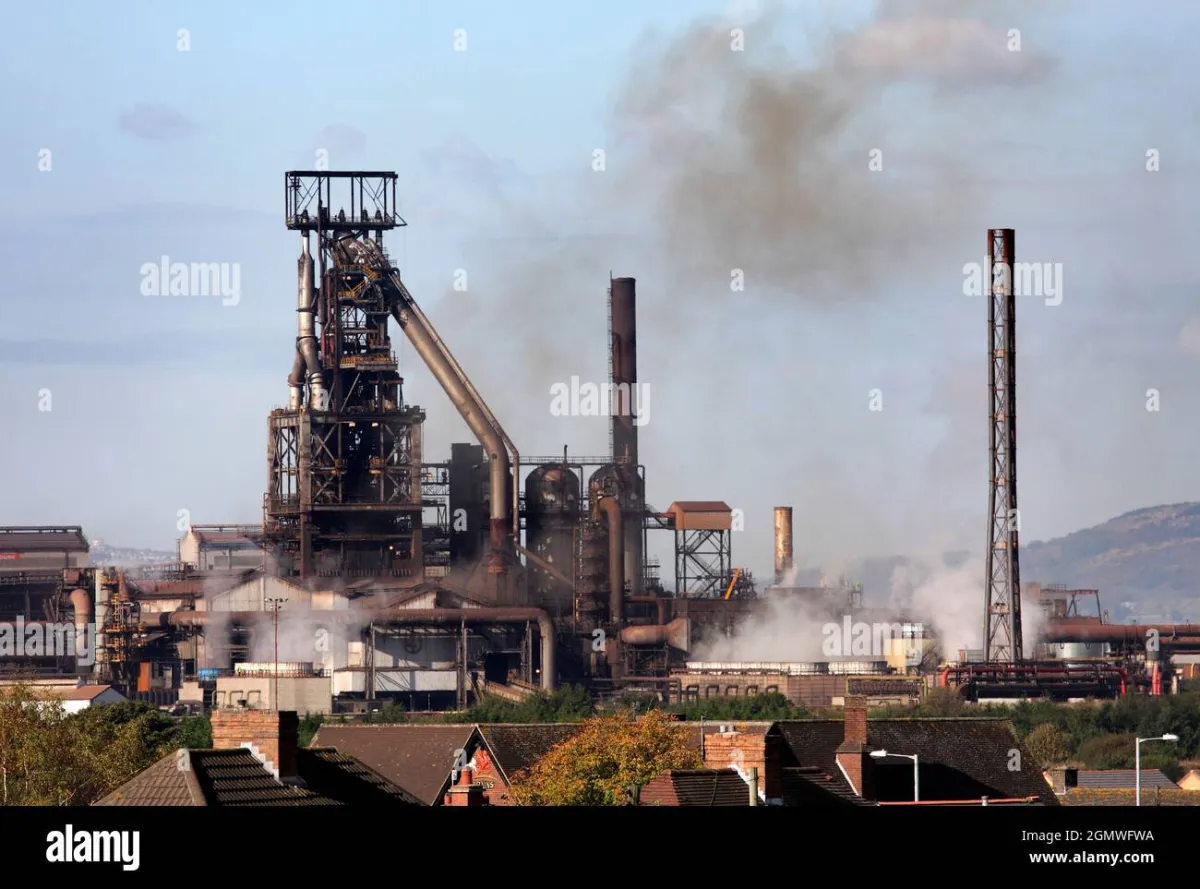 Photo: Port Talbot, via c8.alamy.com
These are also, it is worth noting, the communities that delivered the Brexit vote, that swung to the Conservatives in 2019, and that are now being asked to bear the costs of a green transition designed primarily by and for a professional class in London and the South-East whose employment is not at risk from an electricity surcharge.
When Tata Steel announced the closure of the blast furnaces at Port Talbot in 2023, with the loss of around 2,800 jobs, it cited the economics of the transition to electric arc furnace technology — a transition that is itself dependent on the availability of affordable electricity that Britain's current energy pricing regime cannot reliably provide. The government offered a substantial subsidy package, but the fundamental structural disadvantage — the electricity price gap — was not addressed. The furnaces closed. The community absorbed the blow. The global steel market continued uninterrupted.
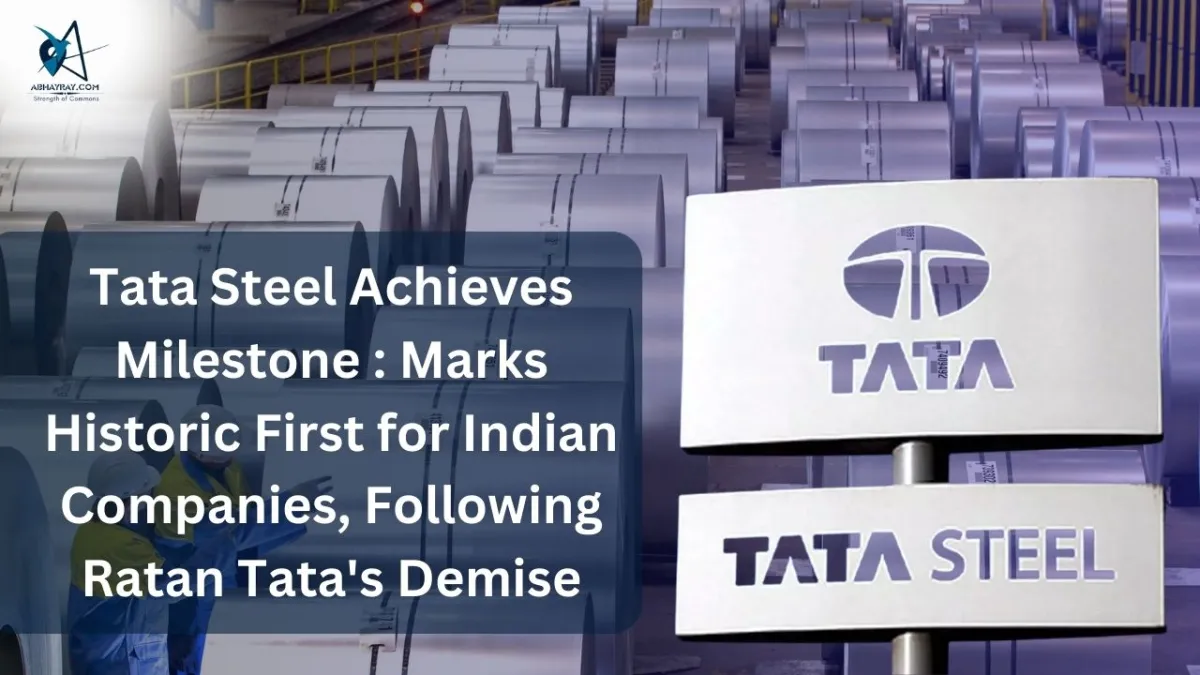 Photo: Tata Steel, via blog.abhayray.com
The Strongest Defence of Current Policy — and Its Limits
The most intellectually serious argument in favour of maintaining the current trajectory is that Britain, as an early mover on carbon pricing and renewable deployment, is building the industrial and technological base for the clean energy economy of the future — that the short-term pain of transition creates long-term competitive advantage in sectors such as offshore wind, green hydrogen, and battery manufacturing.
This argument has some merit. Britain's offshore wind industry is genuinely world-leading. The supply chain opportunities are real. But the argument requires the government to be honest about what it is doing: it is making a deliberate choice to accelerate the decline of one set of industries in the hope that another set will grow to replace them. That choice should be made transparently, with full acknowledgement of the communities bearing the cost, and with a credible, funded plan for economic transition in the affected areas.
What is not acceptable is to pursue that policy while pretending that the closures are the result of market forces rather than policy choices, or that the global climate benefits justify the local economic destruction when the emissions are simply being exported along with the jobs.
What a Serious Industrial Strategy Looks Like
A government genuinely committed to both climate goals and industrial survival would do several things that the current administration has not. It would reform energy levies so that the cost of the renewable transition is spread across the tax base rather than loaded onto industrial electricity bills. It would introduce a meaningful carbon border adjustment mechanism — as the EU is beginning to do — that prevents British producers from being undercut by imports from countries with no carbon price. It would provide long-term, stable support for the most exposed sectors to invest in decarbonisation technology at a pace that preserves employment rather than accelerating redundancy.
None of this is incompatible with a serious commitment to reducing emissions. All of it is incompatible with a Net Zero agenda that treats carbon accounting as an end in itself, regardless of where the carbon actually ends up.
A climate policy that exports British jobs and British emissions simultaneously is not saving the planet — it is saving the consciences of the people who designed it, at the expense of the communities that will never forgive them for it.