Eight Centuries of Protection, One Government's Convenience: The Attack on Trial by Jury Must Be Resisted

Photo of Shabana Mahmood, via Wikimedia Commons
The Proposal That Should Alarm Every Briton
The Crown Court backlog in England and Wales has become a genuine crisis. As of early 2025, more than 70,000 cases were awaiting trial — a figure that has climbed relentlessly since the pandemic and shows no convincing signs of resolution under the current government's stewardship. Defendants wait years for their day in court. Victims endure prolonged uncertainty. Witnesses' memories fade. The system is, by any honest assessment, under severe strain.
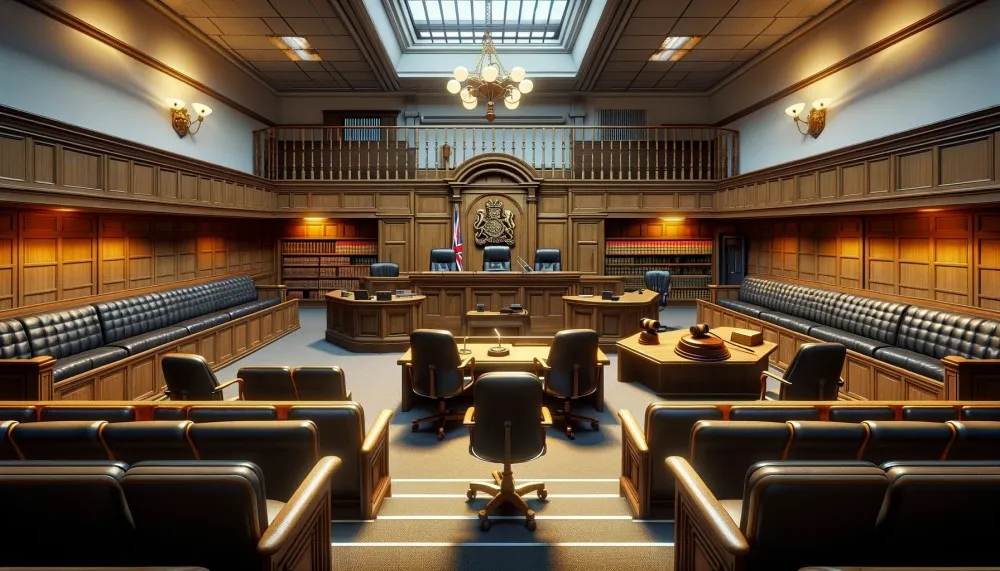 Photo: Crown Court, via www.makwanas.co.uk
 Photo: England and Wales, via cdn.britannica.com
Into this uncomfortable reality, ministers and officials have floated a proposal that ought to trigger alarm well beyond legal circles: restricting or abolishing the right of defendants charged with either-way offences to elect Crown Court trial by jury. Either-way offences — those that can be tried in either the magistrates' court or the Crown Court, depending on severity and the defendant's election — include charges such as theft, assault occasioning actual bodily harm, and drug possession with intent. They represent a substantial portion of the Crown Court's caseload. Moving them wholesale to magistrates' courts would, the argument runs, dramatically reduce the backlog.
The logic is superficially tidy. The implications are profound.
Eight Hundred Years of Hard-Won Protection
Trial by jury in England does not date from a politician's focus group or a Whitehall efficiency review. Its roots lie in Magna Carta (1215), which established that no free man shall be imprisoned, dispossessed, or harmed except by the lawful judgement of his peers. The jury system as it evolved over subsequent centuries became the central mechanism by which that principle was given practical force: twelve ordinary citizens, drawn from the community, empowered to stand between the Crown and the accused and deliver an independent verdict.
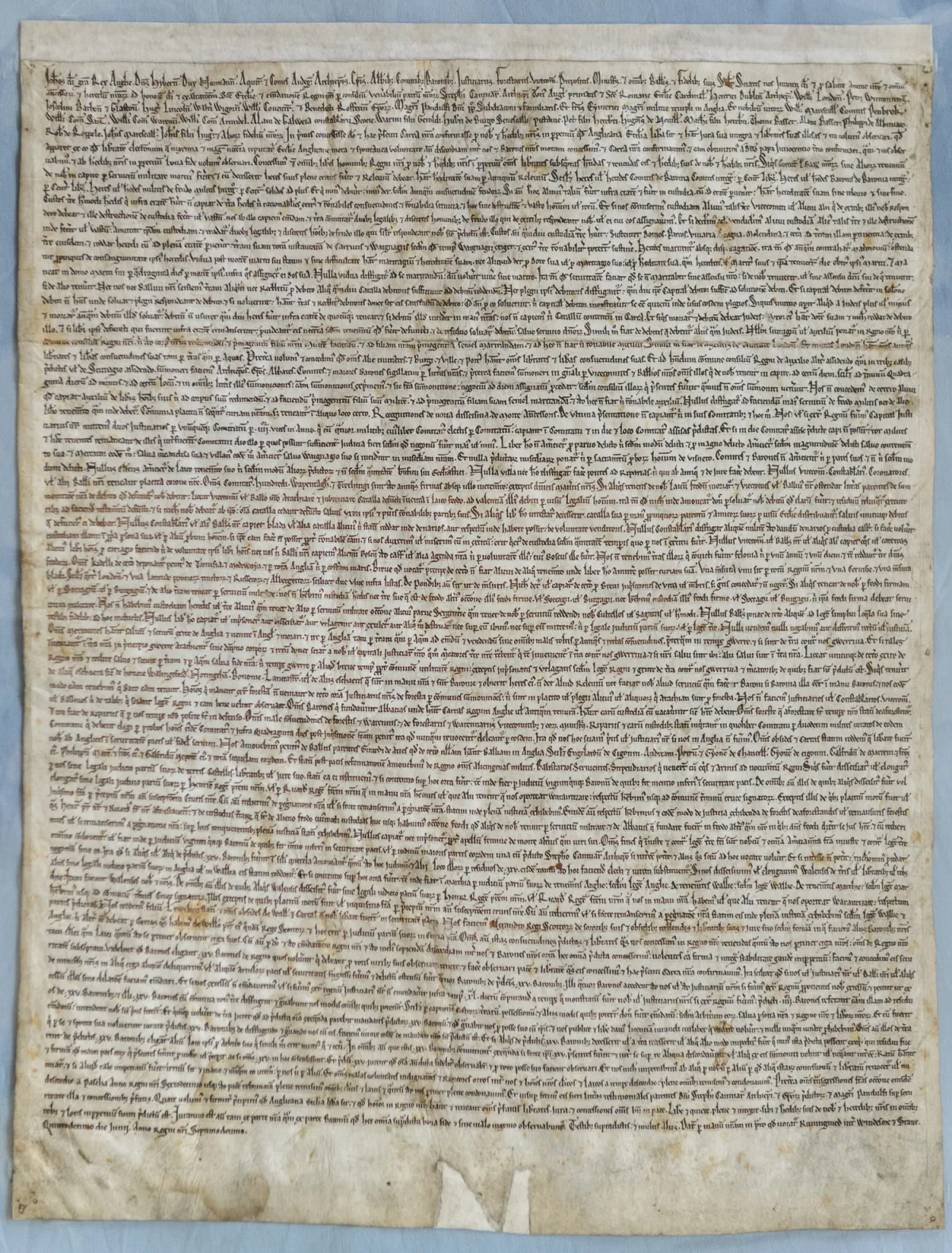 Photo: Magna Carta, via www.nationalarchives.gov.uk
This is not mere historical sentiment. The jury trial has served as a structural check on state power in ways that have mattered enormously at specific moments. Juries have acquitted defendants in politically charged prosecutions where conviction would have served powerful interests. They have, on occasion, refused to convict under laws they considered unjust — a phenomenon known as jury equity, which, whatever its technical legal status, reflects the deep democratic legitimacy that the jury system embeds in the process of criminal justice.
Magistrates' courts offer no such check. Lay magistrates, however conscientious, are not the peers of the accused in any meaningful sense. District judges, who sit alone, are professional members of the legal establishment. Neither configuration provides the same structural independence from institutional pressure that a jury of twelve randomly selected citizens represents. The conviction rate in magistrates' courts is consistently and substantially higher than in Crown Courts — a fact that should give pause to anyone who believes the difference is merely procedural.
The Backlog Is Real — But This Is the Wrong Solution
It would be dishonest to dismiss the Crown Court crisis as a confection. The backlog is real, its human cost is real, and the government is under genuine pressure to act. The strongest version of the reformist argument is that justice delayed is itself an injustice — that defendants who wait three years for trial, witnesses who are repeatedly stood down, and victims who cannot begin to rebuild their lives are all being failed by the current system. If restricting jury elections could substantially reduce waiting times, the argument goes, the net effect on justice might be positive.
This argument deserves to be taken seriously. It should then be rejected.
The backlog was not created by defendants exercising their right to jury trial. It was created by decades of underinvestment in court infrastructure, the catastrophic impact of the pandemic on sitting days, the Legal Aid cuts of the 2010s that have hollowed out the defence bar and slowed proceedings, and a chronic shortage of judges. These are systemic failures of government. The proposal to address them by curtailing defendants' rights is, in effect, a proposal to make citizens pay for the state's own administrative failures — to resolve a problem the government created by reducing the protections available to those the government prosecutes.
If the backlog is to be cleared, the answer lies in more sitting days, more judicial appointments, proper Legal Aid funding, and the kind of sustained investment in court infrastructure that successive governments have deferred. None of that is cheap. All of it is more defensible than eroding a protection that has existed for eight centuries.
The Conservative Case Is Unambiguous
Conservatism, properly understood, is not merely an economic doctrine. It is a disposition toward the preservation of institutions that have proven their worth over time — a recognition that accumulated wisdom, embedded in law and practice, should not be discarded casually in response to present-day pressures. The jury trial is precisely such an institution. It has survived the English Civil War, two World Wars, the IRA campaign, and the War on Terror. It has been pressure-tested across centuries and has emerged as a cornerstone of the constitutional order.
A government that would sacrifice it to clear an administrative backlog — one of its own making — is not a government that takes constitutional liberty seriously. It is a government that views rights as inconveniences and citizens as units to be processed.
The right to be tried by one's peers is not a privilege to be rationed according to the state's current workload. It is a foundational protection, and any administration that moves to restrict it should expect, and deserves, the most vigorous resistance that Parliament and civil society can muster.
When the state proposes to make itself more efficient by making itself less accountable, the answer from a free people should always be the same: no.