Counting Appointments, Not Cures: The Statistical Sleight of Hand Behind Labour's NHS Claims
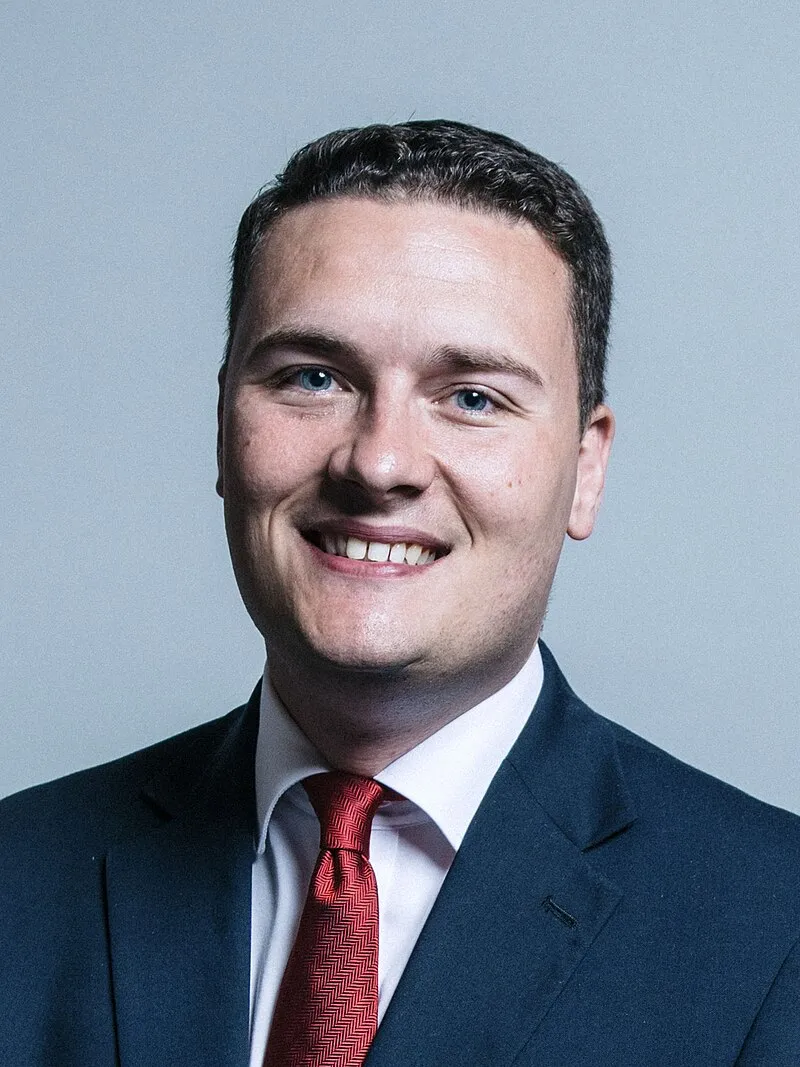
Photo of Wes Streeting, via Wikimedia Commons
The Headline and the Reality Beneath It
In recent months, ministers have pointed with evident satisfaction to a reduction in the NHS's headline waiting list figures. Wes Streeting, the Health Secretary, has described the government's progress as proof that Labour's NHS reform agenda is working. The numbers, on their surface, appear encouraging. Referral-to-treatment waiting times have edged downward. The list of those waiting more than 18 weeks has, in certain categories, contracted.
What ministers have been considerably less eager to explain is how those numbers have been achieved — and what they actually measure.
The answer, increasingly documented by NHS clinicians and patient advocacy groups alike, is that the system has found a way to make waiting lists shorter without making patients better. Rapid triage initiatives, telephone consultations, and so-called 'advice and guidance' pathways have been deployed not primarily to accelerate treatment, but to remove patients from the tracked waiting list altogether. A patient seen briefly by a clinician who recommends watchful waiting, or who is referred back to their GP pending further investigation, is, in the bureaucratic accounting of the NHS, no longer waiting. In reality, they are simply waiting elsewhere — invisibly, uncounted, and often deteriorating.
Gaming the Metric Is Not the Same as Treating the Patient
This is not a new phenomenon in public services, but it is one with particularly grave consequences in healthcare. Goodhart's Law — the principle that when a measure becomes a target, it ceases to be a good measure — has been a recurring affliction of NHS management since the Blair government introduced waiting time targets in the early 2000s. What has changed under Labour is the scale and sophistication of the gaming.
NHS England's own data shows that while referral-to-treatment waiting lists have seen some reduction, the number of people in so-called 'diagnostic limbo' — awaiting scans, test results, or follow-up appointments that are not captured in the headline figure — has remained stubbornly high. According to analysis published by the Health Foundation earlier this year, millions of patients exist in a grey zone between referral and treatment that the government's preferred metric simply does not record. These are not people who have been treated. They are people who have been administratively reclassified.
Cancer waiting time targets offer perhaps the starkest illustration. The NHS constitution standard requires that 85 per cent of patients urgently referred with suspected cancer begin treatment within 62 days. Performance against that target has remained persistently below the threshold. The government's response has been to adjust how the target is reported rather than to meet it — a manoeuvre that would be considered fraudulent in any commercial context but passes unremarked in the managed language of Whitehall health policy.
The Conservative Case: Outcomes, Not Optics
From a conservative standpoint, the fundamental error here is one of incentive design. When government measures its own performance, sets its own targets, and controls the data used to assess whether those targets have been met, the predictable result is the optimisation of the metric rather than the service. This is not a counsel of despair about public healthcare — it is a straightforward observation about the limits of centralised bureaucratic management.
The answer is not more targets, more ministerial press releases, or more NHS reorganisations. It is transparency, genuine competition, and the empowerment of patients to seek care elsewhere when the state system fails them. The expansion of independent sector capacity, the restoration of GP referral autonomy, and meaningful patient choice — including the ability to access treatment abroad at NHS cost — are the kinds of structural reforms that would actually reduce waiting times rather than merely reduce the appearance of them.
Labour's instinct, by contrast, is to protect the institutional structure of the NHS from accountability while deploying its workforce in political messaging. The result is a health secretary who sounds like a reformer while presiding over a system that has become expert at protecting itself from scrutiny.
The Opposition's Strongest Argument — and Its Weakness
Labour's defenders will argue, not without some justification, that the previous Conservative government left the NHS in a state of severe structural underfunding, that the waiting list crisis predates the current administration, and that any minister would struggle to produce genuine outcomes improvement within a single parliamentary term. There is truth in this. The waiting list crisis was not conjured by Wes Streeting, and the workforce shortages that underpin it were a decade in the making.
But this argument, while partially valid as historical context, does not excuse the active misrepresentation of progress. Acknowledging an inherited problem is one thing. Claiming credit for improvements that do not exist in clinical terms — while patients with cancer, heart disease, and degenerative conditions wait in administrative obscurity — is another matter entirely. The government has chosen the language of achievement over the honesty of difficulty, and patients are paying the price for that choice.
What This Signals for the Politics of Health
The NHS remains, polling consistently shows, the issue on which Labour holds its most durable advantage with the British public. It is the institution most closely associated with the party's founding mythology, and the one on which Labour is least willing to accept criticism. That political sensitivity is precisely why the statistical manipulation matters: it insulates the government from the pressure that might otherwise force genuine reform.
If the public comes to understand that falling waiting list figures are a product of administrative reclassification rather than actual treatment, the political consequences could be significant. Opposition parties — and the Conservative Party in particular — have an opportunity to make this case clearly and persistently, not as an attack on the NHS as an institution, but as an attack on the bureaucratic culture that has made it ungovernable.
The patients sitting at home, undiagnosed and untreated but officially 'off the list', deserve better than a government that has learned to count its way out of accountability.
A shorter waiting list is not a healthier nation — and no amount of ministerial spin will make the two the same thing.