The Cashless Society Creep: Why the War on Physical Money Is a War on Financial Freedom
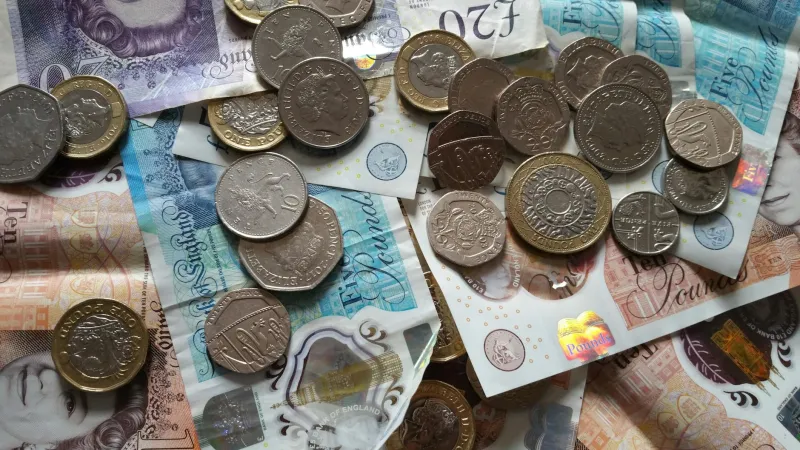
The Silent Revolution Against Cash
Britain is sleepwalking into a cashless society, and the consequences for individual freedom and economic inclusion are more profound than most realise. Bank of England data shows cash payments have plummeted from 60% of transactions in 2008 to just 14% in 2023, while merchant refusals to accept legal tender have become routine across the country. This is not merely technological progress — it is a fundamental shift in the relationship between citizen and state, individual and corporation.
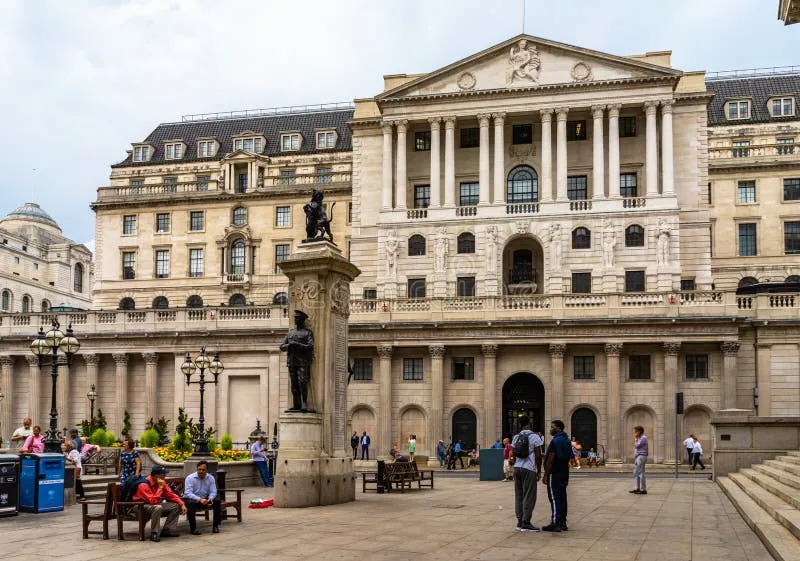 Photo: Bank of England, via thumbs.dreamstime.com
The acceleration has been breathtaking. High street banks have shuttered over 5,000 branches since 2015, leaving entire communities without access to cash services. Simultaneously, retailers from coffee shops to car parks have declared themselves "card only," effectively barring those without digital payment methods from participating in the economy. What began as convenience has become coercion.
The Conservative Case for Cash
From a conservative perspective, the preservation of cash is about far more than nostalgia for coins and notes. Physical money represents three fundamental principles that should be non-negotiable: privacy, independence, and resilience.
First, cash transactions are private by design. When you pay with notes and coins, no corporation or government agency records where you went, what you bought, or whom you met. This is not about hiding criminal activity — it is about maintaining the basic human dignity of conducting lawful business without surveillance. Every card payment creates a digital footprint that can be tracked, analysed, and potentially weaponised against citizens by authoritarian governments or activist corporations.
Second, cash provides genuine financial independence. A digital payment system can be switched off, blocked, or restricted at will. We have seen this power wielded against truckers in Canada, protesters in Hong Kong, and dissidents in authoritarian regimes worldwide. Cash, by contrast, cannot be cancelled by algorithm or bureaucratic decree.
Third, cash offers systemic resilience that digital payments cannot match. When computer systems fail, power grids collapse, or cyber attacks cripple networks, physical money continues to work. The 2017 cyber attack on the NHS should remind us that our digital infrastructure is vulnerable in ways that cash simply is not.
The Excluded and the Forgotten
The human cost of cashless creep falls disproportionately on those least able to adapt. Age UK reports that 2.7 million older people still rely primarily on cash, many lacking the digital literacy or trust in technology required for card payments. Rural communities face particular hardship, with bank closures forcing residents to travel miles for basic services while local businesses refuse the legal tender they can access.
The Financial Conduct Authority acknowledges that 1.3 million adults have no bank account, while millions more maintain only basic accounts that cannot support contactless payments or mobile apps. These are not statistical abstractions — they are British citizens being systematically excluded from economic participation by corporate and governmental indifference.
Consider the practical reality: a pensioner attempting to pay for groceries with notes is turned away, forced to travel to find a bank that still exists, or compelled to rely on family members for digital transactions. This is not progress — it is the abandonment of those who built the prosperity that younger generations now take for granted.
The Corporate Control Problem
The cashless push serves corporate interests far more than consumer welfare. Payment processors collect fees on every digital transaction, creating a permanent tax on commerce that cash never imposed. Visa and Mastercard have built oligopolies that extract billions from British businesses and consumers annually — money that previously remained in the real economy.
Moreover, these corporations gain unprecedented power over who can participate in commerce. Payment processors have already demonstrated willingness to block legal businesses and political causes they disapprove of, from adult entertainment to political donations. A fully cashless society would grant these unelected companies veto power over economic activity.
The Government's Convenient Blindness
Labour's response to cashless creep has been typically inadequate: warm words about "financial inclusion" while doing nothing to protect cash acceptance. The government could mandate that businesses accepting other forms of payment must also accept legal tender, as several European countries have done. Instead, ministers offer consultation documents and working groups while the problem accelerates.
This inaction serves the state's surveillance interests perfectly. A cashless society provides HMRC with complete visibility of every transaction, making tax avoidance nearly impossible but also enabling the kind of financial monitoring that would have horrified previous generations. The temptation for future governments to exploit this power — through negative interest rates, spending restrictions, or social credit systems — is obvious.
International Examples and Warnings
Sweden's experience offers a cautionary tale. The country's rapid cashlessness has created a two-tier society where the digitally excluded struggle to function, while the government scrambles to reintroduce cash access through legislation. China's digital yuan demonstrates how cashless systems can become tools of political control, with the state able to monitor, restrict, or confiscate citizens' money at will.
By contrast, the European Central Bank has mandated that cash must remain available and acceptable throughout the eurozone, recognising that physical money is essential to monetary sovereignty and individual freedom.
The Path Forward
Britain needs a Legal Tender Protection Act that requires any business open to the public to accept cash payments for goods and services under £100. This would preserve choice while acknowledging the legitimate efficiency of digital payments for larger transactions. The Bank of England should mandate minimum cash access points per capita in every constituency, ensuring that no British citizen is more than five miles from cash services.
Moreover, the government should resist the siren call of a central bank digital currency, which would combine the surveillance potential of digital payments with the monopoly power of state money creation. Such a system would represent the final nail in the coffin of financial privacy and independence.
A Question of Freedom
The cashless society is not an inevitable technological evolution — it is a political choice with profound implications for the kind of country Britain becomes. Conservatives understand that freedom is not merely the absence of government oppression but the presence of genuine alternatives and the right to live without constant surveillance.
Cash is freedom made tangible, and its preservation is a conservative cause that transcends party politics — it is about whether Britain remains a country where citizens can conduct their lawful business with dignity, privacy, and independence.