The Sewage Scandal Britain Deserves
This week's revelation that water companies discharged raw sewage into England's rivers and seas for over 3.6 million hours in 2023 represents more than environmental vandalism—it exposes the most comprehensive regulatory failure in modern British history. While Thames Water teeters on the brink of collapse under £15 billion of debt and Southern Water faces a £90 million fine for illegal sewage dumps, Ofwat's response has been to approve inflation-busting bill rises of up to 44% over the next five years. This is not market failure. This is regulatory capture masquerading as economic stewardship.
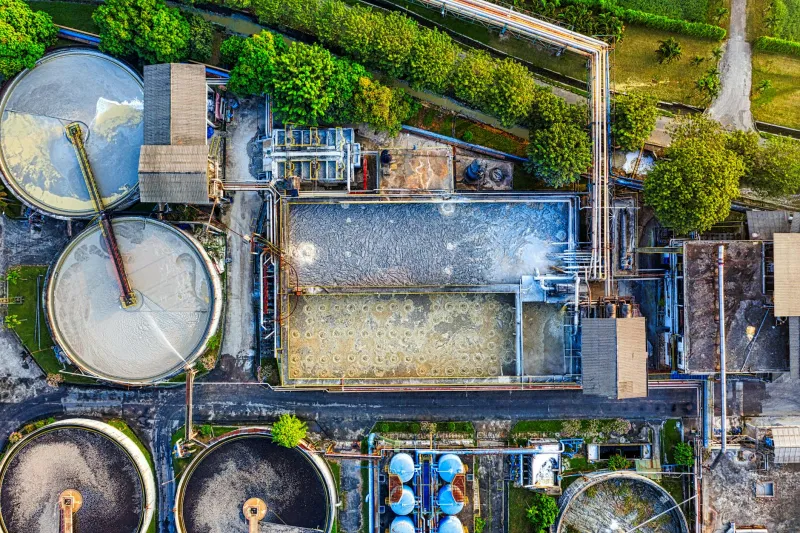
 Photo: Thames Water, via mir-s3-cdn-cf.behance.net
How Monopoly Masqueraded as Competition
When the water industry was privatised in 1989, the promise was clear: private ownership would deliver efficiency, investment, and accountability that state control never could. The principle was sound, but the execution was fatally flawed. Instead of creating genuine competition, privatisation simply transferred regional monopolies from public to private hands, then wrapped them in a regulatory framework designed to guarantee returns rather than deliver results.
Ofwat's price control methodology has become a masterclass in perverse incentives. Companies are guaranteed a regulated return on their asset base, creating every reason to inflate that base through debt-financed acquisitions and gold-plated infrastructure projects while minimising actual service improvements. The result? Water companies now carry debt equivalent to 80% of their regulatory capital value—a leverage ratio that would terrify any real market investor—while sewage treatment works built in Victorian times continue to overflow into rivers during heavy rainfall.
The numbers tell the story of a system designed to enrich shareholders at customers' expense. Since privatisation, water companies have paid out £72 billion in dividends while investing just £56 billion in infrastructure upgrades. Meanwhile, bills have risen 40% above inflation, even as service quality has demonstrably deteriorated. This is not capitalism—it's crony socialism with private profits and socialised risks.
The Accountability Vacuum
Ofwat's defenders argue that regulatory oversight has prevented worse excesses, pointing to periodic fines and enforcement actions. This misses the fundamental point: in a properly functioning market, companies that consistently fail their customers go bankrupt. Under Ofwat's protection, they get bailouts disguised as "special administration" while executives walk away with golden parachutes.
Consider Thames Water's trajectory under Macquarie ownership between 2006 and 2017. The Australian infrastructure fund extracted £2.8 billion in dividends while loading the company with debt and deferring essential maintenance. When performance inevitably deteriorated, Ofwat's response was to approve higher bills to fund catch-up investment—socialising the costs of private mismanagement while the original owners had long since cashed out.
This pattern repeats across the sector because Ofwat has systematically prioritised financial stability over operational performance. Companies that miss sewage treatment targets face penalties that amount to rounding errors on their revenue, while customers who suffer service failures have no meaningful recourse beyond switching to... precisely nobody, because geographical monopolies remain intact.
Why Nationalisation Would Make Things Worse
Labour's instinctive response to this mess is predictable: bring water companies back into state control and run them as public services funded by general taxation. This would compound every existing problem while creating new ones. Public ownership would remove even the theoretical threat of bankruptcy that currently constrains management excess, while political control would subordinate investment decisions to electoral cycles rather than engineering necessity.
The Scottish experience offers a preview. Scottish Water, which remained in public ownership, has achieved lower sewage discharge rates than English companies, but at the cost of chronic underinvestment masked by subsidy. Scottish water infrastructure requires £8 billion of upgrades over the next decade—a bill that will fall on taxpayers regardless of their water consumption, creating precisely the disconnection between service quality and payment that privatisation was supposed to eliminate.
More fundamentally, nationalisation would entrench the geographical monopoly structure that enables current failures. Whether owned by private shareholders or government ministers, a monopoly provider faces no competitive pressure to improve service or control costs. The problem is not ownership structure—it is the absence of meaningful competition.
The Conservative Solution: Competition and Consequences
Genuine conservative reform would tackle the root cause: lack of competitive pressure. This means breaking up geographical monopolies and allowing customers to choose their water supplier, just as they can choose their energy company. The technology exists—water networks can be separated from retail supply, creating a competitive market in customer service while maintaining natural monopoly infrastructure under tight regulation.
Such reform would require primary legislation to override existing licence conditions, but the benefits would be transformative. Competitive suppliers would have every incentive to minimise costs, improve service, and innovate in customer relations, while infrastructure owners would face genuine penalties for network failures that drive customers to competitors.
Parallel reforms to Ofwat's mandate would complete the transformation. Instead of guaranteeing returns on bloated asset bases, the regulator should focus ruthlessly on environmental and service outcomes, with meaningful financial penalties for failure. Companies that cannot meet sewage treatment standards should face licence revocation, not bill increases to fund remedial investment.
The Stakes for Conservative Credibility
The water industry's failures represent a broader challenge to conservative economic philosophy. If privatisation means guaranteed profits for poor performance, protected by regulatory capture, then critics are right to question whether market mechanisms serve public interest. But if conservatives abandon the field to Labour's nationalisation agenda, they concede that state control is the only alternative to crony capitalism.
The truth is that Britain's water crisis demonstrates not the failure of market principles, but their incomplete application. Real competition, genuine accountability, and meaningful consequences for failure remain the best guarantees of efficient service delivery. The Conservative Party's credibility on economic competence depends on proving this case through action, not rhetoric.
Ofwat's decade of failure has left Britons paying premium prices for Third World service—but the solution is more capitalism, not less.