
The Thin End of the Wedge
The Department for Education's consultation on mandatory registration for home-educated children closed last week with barely a whisper of media attention, despite proposing the most significant expansion of state oversight into family life since the Children Act 1989. Buried beneath anodyne language about "safeguarding" and "support," the proposals would create a comprehensive surveillance apparatus allowing local authorities to monitor, assess, and ultimately control how parents educate their children outside the state system.
 Photo: Department for Education, via img.freepik.com
This is not about protecting vulnerable children—existing safeguarding laws already provide robust mechanisms for intervention where abuse or neglect is suspected. Instead, the registration scheme represents the opening salvo in Labour's campaign to eliminate educational alternatives that challenge state orthodoxy. The target is not just homeschooling families, but the principle that parents, not politicians, should determine their children's education.
From Permission to Supervision
Currently, parents in England have an absolute right to educate their children at home, provided they ensure the child receives "efficient full-time education suitable to their age, ability and aptitude." This framework, established in the 1996 Education Act, places the burden of proof on local authorities to demonstrate educational failure before intervening. The proposed register would reverse this presumption entirely.
Under the new system, families would be required to provide detailed annual reports on curriculum content, teaching methods, and educational outcomes. Local authority officers would gain powers to conduct home visits, interview children separately from parents, and demand evidence of "suitable" education according to criteria yet to be defined. Families who refuse cooperation would face prosecution and potential care proceedings.
The shift from permission-based to supervision-based homeschooling fundamentally alters the relationship between family and state. Where parents currently enjoy presumptive authority over their children's education, subject only to demonstrable failure, they would become supplicants required to justify their choices to bureaucrats trained in state school methodologies and progressive pedagogical theories.
The Safeguarding Smokescreen
Government ministers justify these powers by citing isolated cases of educational neglect among homeschooling families, suggesting that children are somehow "invisible" to authorities outside the school system. This reasoning collapses under minimal scrutiny. Home-educated children remain subject to the same safeguarding frameworks as their schooled peers—social services, health visitors, GP appointments, and community interactions all provide multiple touchpoints for identifying genuine welfare concerns.
Moreover, the evidence suggests home-educated children are at lower risk of abuse than their state-schooled counterparts. Serious case reviews consistently identify institutional failures—schools missing signs of abuse, teachers failing to report concerns, or social workers overwhelmed by caseloads—rather than parental education choices as safeguarding risks. The most recent data from the Office for Standards in Education shows that 89% of serious child abuse cases involve children who were attending state schools at the time of the incidents.
 Photo: Office for Standards in Education, via www.shutterstock.com
If safeguarding were genuinely the concern, resources would be better directed toward strengthening existing child protection services rather than creating new bureaucratic layers to monitor families who have chosen legal educational alternatives. The registration scheme's real purpose becomes clear when examining its scope: comprehensive monitoring of curriculum content, teaching philosophies, and educational outcomes that extend far beyond basic welfare checks.
The Ideological Agenda
The timing of this consultation reveals its true motivation. Home education numbers have surged since 2020, driven partly by Covid-19 disruptions but primarily by growing parental dissatisfaction with state school priorities. Families cite concerns about age-inappropriate sex education, critical race theory in the curriculum, and schools' increasing focus on political activism over academic achievement as key factors in their decision to educate at home.
This exodus represents an existential threat to the progressive educational establishment that has captured Britain's schools. Every child educated outside state control is a child beyond the reach of approved ideological instruction, a family that has rejected the state's claim to superior wisdom about child development and learning priorities. The registration scheme would bring these educational refugees back under official supervision, ensuring no child escapes exposure to state-approved values and perspectives.
The consultation documents make this agenda explicit, emphasising local authorities' duty to monitor not just educational standards but "British values," "protected characteristics awareness," and compliance with Equality Act requirements. Homeschooling families would be required to demonstrate that their education promotes "tolerance" and "respect for diversity" according to official definitions that explicitly exclude traditional religious or conservative viewpoints.
The International Perspective
Britain's proposed approach stands in stark contrast to educational freedom protections in other developed nations. The United States Supreme Court has repeatedly affirmed parents' fundamental right to direct their children's education, while countries like Australia and New Zealand maintain light-touch registration systems that focus on educational outcomes rather than ideological compliance.
Even within Europe, Britain would become an outlier in state control. France requires registration but prohibits curriculum interference, while Germany's restrictive homeschooling laws are increasingly criticised by human rights organisations as violations of religious and educational freedom. The European Court of Human Rights has consistently held that parents' philosophical and religious convictions about education deserve protection from state interference.
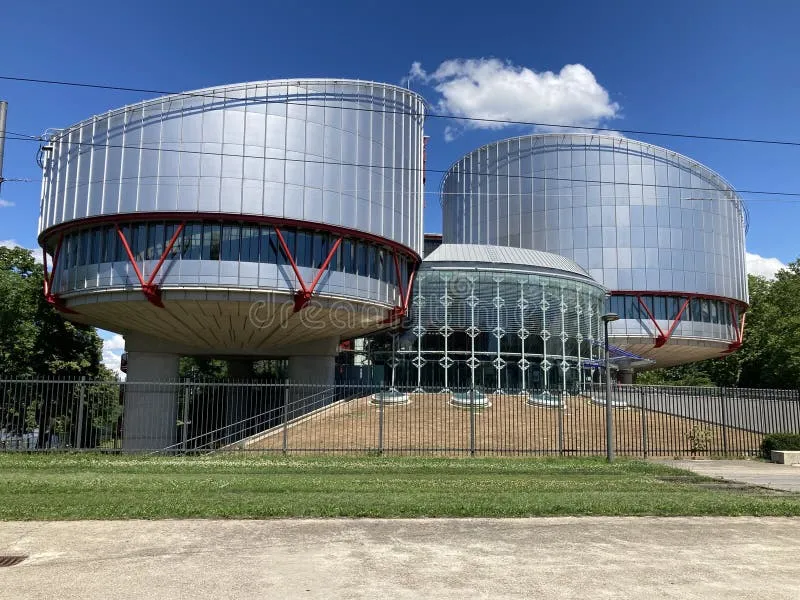 Photo: European Court of Human Rights, via thumbs.dreamstime.com
The government's failure to reference international best practice or comparative educational outcomes suggests this policy is driven by domestic political considerations rather than evidence-based child welfare concerns. Countries with stronger homeschooling protections consistently outperform Britain in international education rankings, undermining claims that state supervision is necessary for educational quality.
The Constitutional Principle at Stake
Beyond immediate practical concerns lies a fundamental question about the relationship between family and state in a free society. The registration scheme embodies the progressive principle that children belong ultimately to the community, with parents serving as temporary custodians subject to official oversight and correction. This represents a complete inversion of the liberal democratic tradition that views families as autonomous units with inherent rights to self-determination.
Conservative philosophy holds that parents possess both natural authority and primary responsibility for their children's upbringing, including educational choices. This authority derives not from state delegation but from the biological and emotional bonds that create families, reinforced by centuries of legal tradition recognising parental rights as fundamental to human flourishing.
The state's role should be limited to protecting children from demonstrable harm while respecting family autonomy in matters of values, priorities, and lifestyle choices. A government that claims authority to monitor and evaluate parental education decisions has crossed the line from protection to control, substituting bureaucratic judgment for family wisdom about individual children's needs and circumstances.
The Slippery Slope
If accepted, the registration principle would inevitably expand beyond homeschooling to encompass all educational choices that deviate from state preferences. Private schools could face similar monitoring requirements to ensure curriculum compliance with official values. Religious education would become subject to secular oversight. Even parental conversations about history, politics, or morality could fall under scrutiny if deemed insufficiently aligned with approved perspectives.
The precedent established by homeschooling registration would fundamentally alter the balance between family autonomy and state authority across multiple domains. Once the principle is established that parents must justify their choices to officials rather than simply avoid demonstrable harm, there are no logical limits to bureaucratic intervention in family life.
The Path Forward
Conservative opposition to this scheme must go beyond defending homeschooling families to articulating a broader vision of educational freedom that respects parental authority while maintaining appropriate safeguards. This means supporting existing child protection mechanisms while rejecting ideological monitoring disguised as welfare concern.
The registration scheme represents everything conservatives should oppose: expansion of state power, erosion of family autonomy, and bureaucratic interference in personal choices. Defeating it requires recognising that educational freedom is not a niche interest but a fundamental principle that protects every family's right to raise children according to their values and convictions.
Labour's homeschooling register is the first step toward total state control of childhood—conservatives must ensure it is also the last.