The Countryside Betrayal: How Labour's Combined Authorities Agenda Is Handing Rural Britain's Future to City Hall

The Metropolitan Takeover
Labour's quiet revolution in local government is systematically dismantling rural England's political autonomy, replacing centuries of local democracy with metropolitan bureaucracies that treat the countryside as an inconvenient appendage to urban centres. The government's aggressive expansion of combined authorities and metro mayors represents far more than administrative reorganisation — it is the deliberate subordination of rural communities to city hall politics.
Since taking office, Labour has accelerated the creation of combined authorities across England, with rural districts increasingly absorbed into metropolitan regions dominated by urban populations and priorities. The latest proposals would see ancient county boundaries dissolved into artificial constructs designed around economic geography rather than community identity, cultural heritage, or democratic accountability.
This is not devolution — it is centralisation disguised as localism, concentrating power in regional bureaucracies that are closer to Whitehall than the village hall while systematically diluting the political voice of rural England.
The Democratic Deficit
The mathematics of metropolitan democracy are brutal for rural communities. When a combined authority encompasses both Manchester city centre and the Pennine villages, or Birmingham and the Warwickshire countryside, urban voters inevitably dominate every decision. Rural districts that have maintained distinct political identities for generations find themselves outvoted on every issue from housing targets to transport priorities.
Consider the West Midlands Combined Authority, where rural Shropshire and Staffordshire communities are governed by a mayor elected primarily by Birmingham voters. These rural areas contribute significantly to the regional economy through agriculture, tourism, and small businesses, yet their concerns about green belt protection, rural transport, and agricultural policy are systematically overruled by urban priorities.
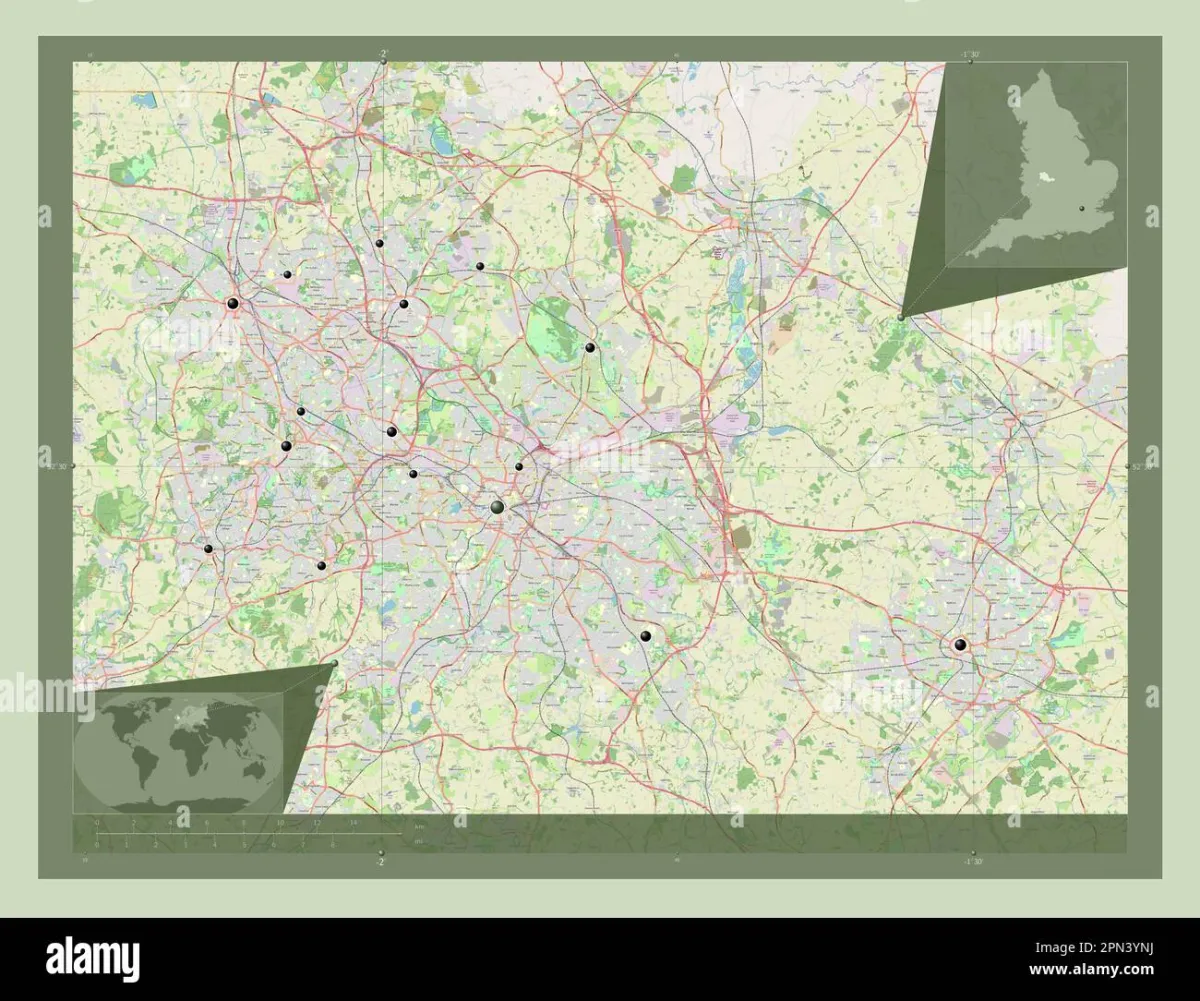 Photo: West Midlands Combined Authority, via c8.alamy.com
The result is a form of democratic colonialism where rural England provides the tax base and land for metropolitan expansion while losing any meaningful say in how it is governed. This represents a fundamental violation of the conservative principle of subsidiarity — that decisions should be taken at the most local level possible by people who understand local conditions and bear the consequences of their choices.
Following the Money
The financial flows within combined authorities reveal the true nature of this metropolitan bias. Department for Levelling Up data shows that funding within combined authorities is systematically skewed toward urban cores, with rural areas receiving disproportionately less investment per capita despite often having higher infrastructure needs and maintenance costs.
The Greater Manchester Combined Authority exemplifies this pattern. While rural districts contribute through business rates and council tax, the majority of transport investment flows to urban transit systems that serve city commuters rather than the rural bus routes and road maintenance that these communities desperately need. Housing and regeneration funds are similarly concentrated in urban areas, leaving rural communities to watch their young people leave for lack of affordable housing while being told they cannot build to meet local needs.
 Photo: Greater Manchester Combined Authority, via images.seeklogo.com
This represents a fundamental breach of the social contract between urban and rural England. Rural areas provide food security, environmental services, and quality of life benefits that urban populations depend upon, yet receive diminishing political representation and public investment in return.
Planning Policy Colonialism
The combined authority model has become a vehicle for imposing urban planning assumptions on rural communities that operate under entirely different constraints and priorities. Metro mayors, elected primarily by urban voters, now have strategic planning powers over vast rural hinterlands that they rarely visit and poorly understand.
The result is housing targets that ignore rural infrastructure constraints, transport policies designed around urban assumptions, and environmental strategies that treat working countryside as urban parkland. Rural communities find themselves forced to accept development patterns that destroy their character and overwhelm their services to meet targets set by politicians whose electoral base lies in distant city centres.
The North of Tyne Combined Authority provides a stark example, where rural Northumberland faces housing and infrastructure demands driven by Newcastle's growth agenda rather than local housing needs or environmental capacity. Ancient market towns are being transformed into suburban extensions of metropolitan areas, losing the economic and social functions that sustained them for centuries.
 Photo: North of Tyne Combined Authority, via www.kinocreative.co.uk
The Cultural Dimension
Beyond the immediate political and economic consequences, the combined authority agenda represents an assault on the cultural distinctiveness that makes rural England worth preserving. Rural communities have developed different approaches to everything from economic development to social organisation based on geography, history, and the requirements of rural life.
These differences are not merely quaint traditions but practical adaptations to different environments and economic realities. Rural businesses operate on different cycles, face different challenges, and require different support than urban enterprises. Rural transport needs are fundamentally different from urban mobility patterns. Rural housing markets function according to different dynamics than urban property speculation.
When these communities are absorbed into metropolitan authorities, their distinctive needs and approaches are inevitably subordinated to urban norms. The result is a form of cultural homogenisation that impoverishes not just rural areas but the nation as a whole by destroying diversity of experience and approach.
The Conservative Alternative
True conservative localism would strengthen rather than weaken rural democracy by ensuring that communities retain meaningful control over their own affairs. This requires rejecting the false choice between centralised bureaucracy and metropolitan absorption in favour of genuine subsidiarity.
First, rural districts should be protected from forced absorption into metropolitan combined authorities. Where regional coordination is necessary, it should operate through voluntary partnerships that preserve local democratic accountability rather than creating new layers of bureaucracy.
Second, funding formulas must recognise the higher per-capita costs of providing services in rural areas while ensuring that rural communities receive fair shares of national investment. The current system that channels resources through metropolitan authorities inevitably favours urban priorities.
Third, planning powers should remain with local authorities that understand local conditions and are accountable to local electorates. Strategic coordination can be achieved through county-level planning frameworks that respect district autonomy rather than metropolitan diktat.
The Sovereignty Question
The combined authority agenda raises fundamental questions about the nature of British democracy and the relationship between different communities within the union. Rural England is not simply the empty space between cities — it is home to millions of citizens with distinct interests, values, and ways of life that deserve political representation.
When these communities lose meaningful self-government, Britain loses part of its democratic soul. The conservative tradition recognises that healthy democracy requires multiple centres of power and diverse approaches to common challenges. Concentrating authority in metropolitan bureaucracies destroys this diversity in favour of technocratic uniformity.
Historical Precedent and Warning
Britain has experienced this pattern before. The municipal boundary reforms of the 1970s absorbed many historic boroughs and rural districts into larger authorities, weakening local democracy and reducing citizen engagement with local government. The current combined authority agenda represents a massive acceleration of this centralising tendency.
Other European countries have recognised the dangers of metropolitan dominance and taken steps to protect rural democracy. Switzerland's cantonal system ensures that rural communities retain meaningful autonomy within federal structures. France's commune system preserves local identity even within metropolitan regions.
Britain's current trajectory threatens to create a two-tier democracy where metropolitan areas enjoy genuine self-government while rural communities become administrative appendages of distant urban bureaucracies.
The Stakes
The countryside betrayal is not merely about administrative efficiency or economic development — it is about whether rural England will survive as a distinct and viable part of British society. When rural communities lose political voice, they lose the ability to shape their own futures and preserve the ways of life that make them distinctive.
Conservatives understand that Britain's strength has always come from its diversity — the creative tension between different communities, economies, and approaches to common challenges. The metropolitan takeover threatens to reduce this rich diversity to suburban uniformity managed by distant bureaucrats who have never experienced the realities of rural life.
The choice is clear: genuine devolution that strengthens local democracy, or metropolitan colonialism that reduces rural England to a theme park for urban consumption — and Labour has already chosen the wrong side.