
The State's Latest Land Grab
The Labour government has quietly unveiled reforms to England's compulsory purchase order (CPO) system that amount to one of the most significant expansions of state power over private property in a generation. Under new guidance issued by the Ministry of Housing, Communities and Local Government, councils and development corporations will be handed enhanced powers to acquire private land at valuations that systematically undercut genuine market rates. What ministers are billing as essential reform to accelerate housebuilding is, in reality, a state-sanctioned wealth transfer from private landowners to public bodies and their preferred developers.
The changes centre on how compensation is calculated when the state exercises its ultimate power to force a sale. Previously, landowners could expect compensation based on the land's development potential under existing or reasonably anticipated planning permissions. The new framework introduces "social value" adjustments that can slash payouts by up to 30%, alongside extended timescales that effectively freeze land values during protracted acquisition processes. For a family farm on the edge of a growing town, this could mean the difference between a fair retirement settlement and financial ruin.
Property Rights Under Assault
From a conservative perspective, this represents nothing less than an assault on the property rights that form the bedrock of a free society. The principle that private property cannot be seized without fair compensation has been a cornerstone of English law since the Magna Carta. When the state can acquire land on the cheap simply by redefining "fair value" to suit its political objectives, we have crossed a line that separates liberal democracy from something altogether more sinister.
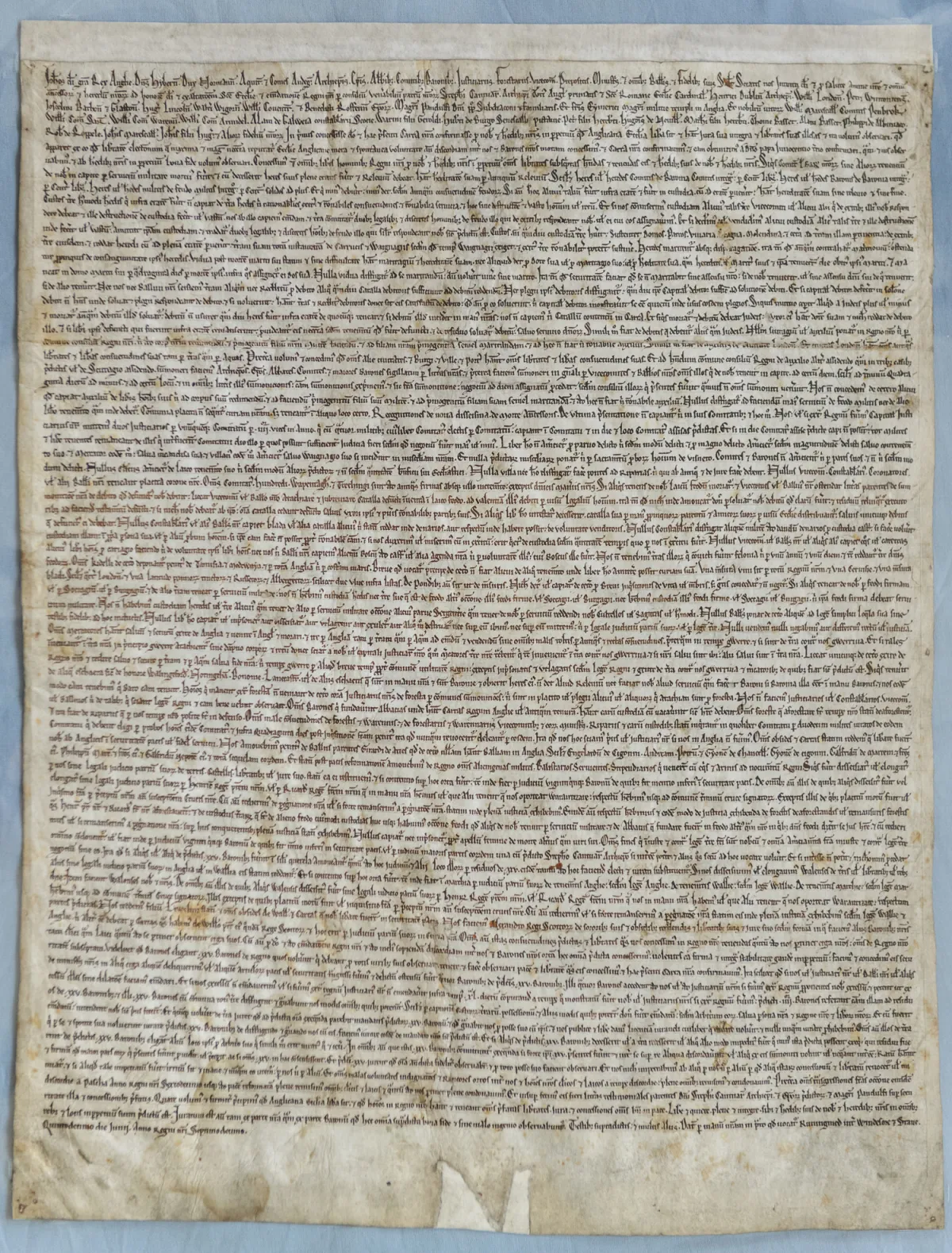 Photo: Magna Carta, via www.nationalarchives.gov.uk
The government's justification rests on the familiar progressive argument that individual property rights must yield to collective housing needs. Housing Secretary Angela Rayner has argued that current compensation levels create "excessive windfalls" for landowners while hindering essential development. This framing deliberately obscures the real issue: if the state needs private land for public purposes, it should pay the full market price, not engineer a system that socialises the costs of its policy failures.
 Photo: Angela Rayner, via cdn.mos.cms.futurecdn.net
The fiscal responsibility argument is equally compelling. When compensation is artificially suppressed, the true cost of public projects is hidden from taxpayers and Parliament. A council that can acquire land for £100,000 rather than its market value of £150,000 appears to be delivering better value for money, but the £50,000 difference hasn't vanished—it has simply been confiscated from the landowner. This is taxation by stealth, bypassing democratic scrutiny of public spending.
The Rural Communities Casualty List
The practical impact falls disproportionately on precisely the constituencies that form the backbone of conservative Britain. Small farmers face particular vulnerability, as agricultural land values are typically lower than development potential would suggest, but the new "social value" calculations can eliminate even modest premiums for proximity to expanding settlements. A farming family that has worked the same land for generations could find themselves forced to sell at agricultural rates while watching a housing estate rise on soil their grandfather planted.
Rural communities more broadly suffer as local councils, emboldened by cheaper acquisition costs, pursue ever more ambitious regeneration schemes. The market mechanism that once provided natural restraint—the need to pay fair value for land—has been deliberately weakened. The result will be more aggressive use of compulsory purchase powers, not less, as the financial barriers to state land acquisition are systematically lowered.
Meanwhile, large developers and institutional investors remain largely insulated from these changes. Major housebuilders typically own extensive land banks acquired through willing seller transactions, while institutional funds can afford the legal firepower necessary to challenge unfavorable CPO valuations. The new system creates a two-tier market where sophisticated operators navigate around the restrictions while ordinary property owners bear the full weight of state intervention.
The Development Delusion
Labour's central claim—that cheaper land acquisition will accelerate housebuilding—reflects a fundamental misunderstanding of what constrains development. The primary barriers to housing supply are not land costs but planning delays, regulatory complexity, and infrastructure capacity. A council that can acquire development sites for 30% below market value still faces the same planning bottlenecks, utility constraints, and local opposition that slow delivery.
International evidence consistently shows that state-led land assembly produces slower, not faster, development outcomes. The most successful housebuilding jurisdictions rely on market mechanisms to allocate land efficiently, supported by streamlined planning systems that provide certainty for private investment. Britain's housing crisis stems from planning restrictions that artificially constrain supply, not from landowners demanding fair compensation for their assets.
The government's approach also ignores the crucial role that land value capture plays in financing infrastructure. When landowners receive full market value for development land, they have both the incentive and the resources to invest in complementary projects—upgraded farm buildings, rural business ventures, or simply spending that supports local economies. Suppressed compensation breaks this virtuous cycle, concentrating capital in state hands while impoverishing the rural communities that lose their land.
A Dangerous Precedent
Perhaps most troubling is what these reforms reveal about Labour's relationship with individual liberty. A government comfortable redefining "fair compensation" to suit its political objectives has demonstrated that property rights are negotiable rather than fundamental. Today's target is undeveloped land needed for housing; tomorrow's could be commercial property required for net zero infrastructure, or residential assets deemed necessary for social housing.
The conservative response must be unequivocal: property rights are not a luxury to be discarded when politically convenient, but the foundation upon which all other freedoms rest. A state that can seize private assets at below-market rates is a state that has forgotten the difference between public service and public power.
The Market Alternative
The genuine conservative alternative lies not in cheaper state acquisition but in planning reform that makes private development more attractive and efficient. Simplifying planning permissions, reducing regulatory delays, and providing infrastructure investment would create conditions where landowners voluntarily bring forward development sites at competitive prices. Market mechanisms, not state coercion, remain the most effective tool for allocating scarce resources—including land.
Britain's housing crisis demands urgent action, but solutions that undermine fundamental property rights will ultimately prove more costly than the problems they purport to solve. When the state can rewrite the rules of fair compensation to suit its budget, we have not solved the housing crisis—we have simply created a constitutional one.
The compulsory purchase reforms represent Labour's clearest signal yet that it views private property as an obstacle to progress rather than a pillar of freedom—a perspective that reveals everything about this government's true priorities.